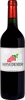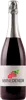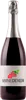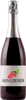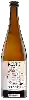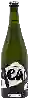
Winery ValdhuberRosé
 Sparkling wine
This wine generally goes well with
Details and technical informations about Winery Valdhuber's Rosé.
Discover the grape variety: Muskat Oliver
Obtained in Hungary in 1930 by Pal Kocsis by crossing the pozsonyi fehér (pressburger or white presbourg) and the pearl of Csaba. This double-ended variety is found in Hungary, Ukraine, Russia, the Slovak Republic (small Carpathians), the Czech Republic (Moravia), etc. It is virtually unknown in France.
Informations about the Winery Valdhuber
The Winery Valdhuber is one of of the world's greatest estates. It offers 13 wines for sale in the of Štajerska to come and discover on site or to buy online.

The wine region of Štajerska
The wine region of Štajerska is located in the region of Podravje of Slovenia. Wineries and vineyards like the Domaine Pullus or the Domaine Črnko produce mainly wines white, red and sparkling. The most planted grape varieties in the region of Štajerska are Riesling, Chardonnay and Pinot noir, they are then used in wines in blends or as a single variety. On the nose of Štajerska often reveals types of flavors of citrus, melon or peach and sometimes also flavors of minerality, lemon or pear.
The wine region of Podravje
Podravje is Slovenia's largest and most productive wine region. It is located towards the eastern half of the country, and Centers around the key towns of Maribor and Ormoz. With roughly 11,000 hectares (30,000 acres) of Vineyard">Vineyard, Podravje has twice as much land under vine as its western neighbor, Posavje. More than just a local center of activity, Maribor has Long been a wine center for this region of Europe as a whole.
The word of the wine: Grand Cru
In Burgundy, the fourth and final level of classification (above the regional, communal and premier cru appellations), designating the wines produced on delimited plots of land (the climats) whose name alone constitutes the appellation. The climats classified as Grand Cru are 32 in the Côte d'Or plus one in Chablis which is divided into 7 distinct climats. Representing barely 1.5% of the production, the Grand Crus are the aristocracy of Burgundy wines.