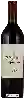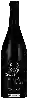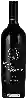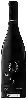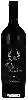
Winery Force MajeureAuction 2 Lot 14
 wine
wine
This wine generally goes well with
The Auction 2 Lot 14 of the Winery Force Majeure is in the top 0 of wines of Washington.
Details and technical informations about Winery Force Majeure's Auction 2 Lot 14.
Discover the grape variety: Victoria
An intraspecific cross between the cardinal and the Beirut date tree - the latter also bears the synonyms afuz (or afus) ali or regina - obtained in 1964 by Victoria Lepadatu and Gheorghe Condei of the Horticultural Research Institute of Dragasani (Romania). It should be noted that a Russian variety of table grape bears the same name, but it is unlikely to be confused with it because its berries are purplish pink to dark red when fully ripe. Victoria is found in Italy, Austria, Greece, Bulgaria, Romania, South Africa... almost unknown in France, registered in the Official Catalogue of table grape varieties, list A2.
Informations about the Winery Force Majeure
The Winery Force Majeure is one of of the world's great estates. It offers 27 wines for sale in the of Washington to come and discover on site or to buy online.

The wine region of Washington
Washington State is located in the Pacific Northwest of the United States, immediately north of Oregon. Although the history of the wine industry is relatively Short, Washington's 900-plus wineries and 350-plus independent winemakers, with more than 50,000 acres of vineyards, now produce more wine than any other state except California. Almost all wine production is in the hot, desert-like eastern Part of Washington, although there is some Grape growing and an AVA (Puget Sound) in the cooler, wetter west. White Chardonnay and Riesling grapes, and red Merlot, Cabernet Sauvignon and Syrah grapes are the main varieties grown in Washington, but the region produces quality wines from nearly 70 different grape varieties.
The word of the wine: Deposit
Solid particles that can naturally coat the bottom of a bottle of wine. It is rather a guarantee that the wine has not been mistreated: in fact, to avoid the natural deposit, rather violent processes of filtration or cold passage (- 7 or - 8 °C) are used in order to precipitate the tartar (the small white crystals that some people confuse with crystallized sugar: just taste to dissuade you from it)