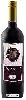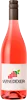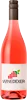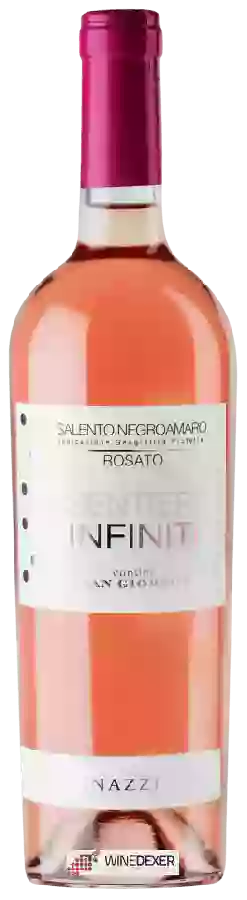
Winery TinazziSentieri Infiniti Negroamaro Salento Rosato
 Pink wine



This wine generally goes well with
Details and technical informations about Winery Tinazzi's Sentieri Infiniti Negroamaro Salento Rosato.
Discover the grape variety: Voltis
Wine grape variety of the INRA-Resdur1 series with polygenic resistance (two genes for mildew and powdery mildew have been identified), resulting from an interspecific cross, obtained in 2002, between Villaris and Mtp 3159-2-12 (for the latter, one of its parents is Vitis rotundifolia, which is resistant to Pierce's disease, mildew, grey rot, etc.). Little multiplied, it is registered in the Official Catalogue of wine grape varieties list A1.
Last vintages of this wine
The best vintages of Sentieri Infiniti Negroamaro Salento Rosato from Winery Tinazzi are 2019, 0, 2018
Informations about the Winery Tinazzi
The Winery Tinazzi is one of of the world's great estates. It offers 271 wines for sale in the of Salento to come and discover on site or to buy online.

The wine region of Salento
The wine region of Salento is located in the region of Pouilles of Italy. We currently count 851 estates and châteaux in the of Salento, producing 2704 different wines in conventional, organic and biodynamic agriculture. The wines of Salento go well with generally quite well with dishes .
The wine region of Puglia
Puglia (Apulia to many English speakers) is a Long, slender wine region in the extreme Southeast corner of Italy's "boot". To use the shoe analogy often used to illustrate the shape of Italy, Apulia extends from the tip of the heel to the mid-calf, where the spur of the Gargano Peninsula juts out into the Adriatic Sea. The heel (the Salento peninsula) occupies the southern half of the region and is of great importance for the identity of Puglia. Not only are there cultural and geographical differences from Northern Puglia, but the wines are also different.
The word of the wine: Rosé de saignée
A method of making rosé wine that consists of partially draining a vat of red wine after a few hours of maceration. The longer the maceration, the stronger the colour. This practice gives rich and expressive rosés.