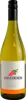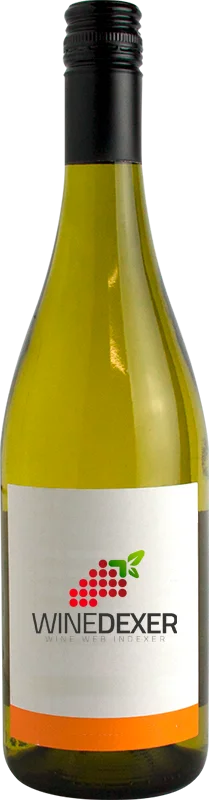
Winery StammChardonnay
 White wine



In the mouth this white wine is a powerful with a nice freshness.
This wine generally goes well with pork, vegetarian or poultry.

Taste structure of the Chardonnay from the Winery Stamm
Light | Bold | |
Dry | Sweet | |
Soft | Acidic |
In the mouth the Chardonnay of Winery Stamm in the region of Schaffhausen is a powerful with a nice freshness.
Food and wine pairings with Chardonnay
Pairings that work perfectly with Chardonnay



Original food and wine pairings with Chardonnay

The Chardonnay of Winery Stamm matches generally quite well with dishes of pork, rich fish (salmon, tuna etc) or vegetarian such as recipes of quiche with bacon and gruyère cheese, pasta with tuna and tomato sauce or leek, goat cheese and bacon quiche.
Details and technical informations about Winery Stamm's Chardonnay.
Discover the grape variety: Chardonnay
Whites with many faces: mineral and taut at Chablis (lemon, green apple, flint), opulent and buttery at Meursault and Puligny-Montrachet (hazelnut, brioche, yellow fruits), tense and chalky in Champagne (Blanc de Blancs). Also vinified sparkling and widely exported (Sonoma, Margaret River, Casablanca). A Burgundian variety, a cross of Pinot Noir × Gouais Blanc, half-sibling of Aligoté.
Last vintages of this wine
The best vintages of Chardonnay from Winery Stamm are 0
Informations about the Winery Stamm
The Winery Stamm is one of of the world's great estates. It offers 62 wines for sale in the of Schaffhausen to come and discover on site or to buy online.

The wine region of Schaffhausen
Wine canton of northern German-speaking Switzerland, nicknamed "Blauburgunderland". Signature Pinot Noir (Blauburgunder, 60-70%): fine, silky reds with signature notes of cherry, raspberry, undergrowth, sweet spices and a chalky mineral touch, delicate tannins and taut freshness — compared to fine village Burgundies. Klettgau is the flagship sub-region. Müller-Thurgau whites (local Riesling-Silvaner) lively and fruity (apple, citrus).
The word of the wine: Malic (acid)
An acid that occurs naturally in many wines and is transformed into lactic acid during malolactic fermentation.