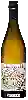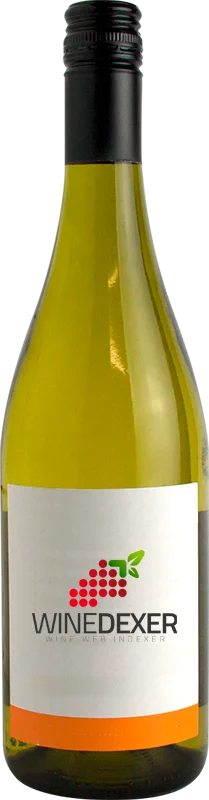
Winery Theobald PfaffmannGrauer Burgunder
 White wine
In the mouth this white wine is a .
This wine generally goes well with pork, cured meat or mushrooms.
Taste structure of the Grauer Burgunder from the Winery Theobald Pfaffmann
Light | Bold | |
Dry | Sweet | |
Soft | Acidic |
In the mouth the Grauer Burgunder of Winery Theobald Pfaffmann in the region of Pfalz is a .
Food and wine pairings with Grauer Burgunder
Pairings that work perfectly with Grauer Burgunder


Original food and wine pairings with Grauer Burgunder

The Grauer Burgunder of Winery Theobald Pfaffmann matches generally quite well with dishes of pork, spicy food or mushrooms such as recipes of moist parmesan steak, chicken tagine with apricots or gizzards in sauce.
Details and technical informations about Winery Theobald Pfaffmann's Grauer Burgunder.
Discover the grape variety: Barbera noire
This variety has been cultivated for a very long time in Italy - currently in second place - and is very well known in Piedmont. It is, however, little known in France and is registered in the Official Catalogue of Wine Grape Varieties, list A1. It is not related to the white barbera, which also comes from the same country and region. It should be noted that other Italian grape varieties, mainly black, bear the name barbera, which should not be confused with the black Barbera that can also be found in Eastern Europe, South Africa and America.
Informations about the Winery Theobald Pfaffmann
The Winery Theobald Pfaffmann is one of of the world's great estates. It offers 28 wines for sale in the of Pfalz to come and discover on site or to buy online.

The wine region of Pfalz
Pfalz is a key wine producing region in western Germany, located between the Rhein/Rhine river and the low-lying Haardt mountain range (a natural continuation of the Alsatian Vosges). It covers a rectangle of land 45 miles (75km) Long and 15 miles (25km) wide. To the NorthLiesRheinhessen; to the South, the French border and Alsace. In terms of both quality and quantity, Pfalz is one of Germany's most important regions, and one which shows great promise for the future.
The word of the wine: Flavours
There are generally four so-called fundamental flavours: acidity, bitterness, sweetness and saltiness. The first three are considered to be the building blocks of the structure of wines. They are perceived by the taste buds that cover the surface of the tongue.