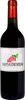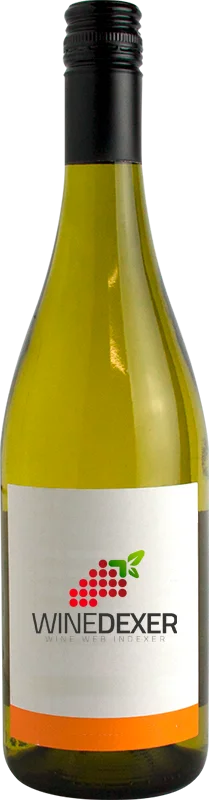
Winery TescoSicilian White
 White wine



In the mouth this white wine is a powerful.
This wine generally goes well with vegetarian, appetizers and snacks or shellfish.
Taste structure of the Sicilian White from the Winery Tesco
Light | Bold | |
Dry | Sweet | |
Soft | Acidic |
In the mouth the Sicilian White of Winery Tesco in the region of Sicily is a powerful.
Food and wine pairings with Sicilian White
Pairings that work perfectly with Sicilian White



Original food and wine pairings with Sicilian White
The Sicilian White of Winery Tesco matches generally quite well with dishes of shellfish, vegetarian or appetizers and snacks such as recipes of mussels with roquefort cheese, cream and tuna quiche or hummus.
Details and technical informations about Winery Tesco's Sicilian White.
Discover the grape variety: Cabernet-Cantor
Interspecific crossing between Chancellor and Solaris made in 1989 by Norbert Becker of the Freiburg Research Institute in Germany. Cabernet-Cantor can be found in Germany, Switzerland, the Netherlands, Belgium, Lithuania, Poland, ... little known in France.
Last vintages of this wine
The best vintages of Sicilian White from Winery Tesco are 2017
Informations about the Winery Tesco
The Winery Tesco is one of wineries to follow in Sicile.. It offers 392 wines for sale in the of Sicily to come and discover on site or to buy online.

The wine region of Sicily
Sicily is the Southernmost region of Italy, and the largest island in the Mediterranean Sea. For over 2500 years, Sicily (Sicilia in Italian) has been an important centre of Mediterranean viticulture, although the reputation and style of its wines have changed considerably over time. The island was once best known for its Sweet muscatels (see Pantelleria), and later for its fortified Marsala. Today, many of its best-known wines are Dry table wines produced under the regional designation IGT Terre Siciliane, or Sicilia DOC (see below).
The word of the wine: Draft liquor (champagne)
After blending, the wine is bottled with a liqueur de tirage (a mixture of sugar and wine) and a yeast (selected yeasts). The yeast attacks the sugar and creates carbon dioxide. The fermentation, which lasts about two months, is prolonged by an ageing period (15 months minimum in total). The bottle is capped (some rare vintages are capped with a staple and a cork).