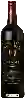
Château Tertre Grand MayneBordeaux
 Red wine
In the mouth this red wine is a powerful with a nice balance between acidity and tannins.
This wine generally goes well with poultry, beef or veal.

Taste structure of the Bordeaux from the Château Tertre Grand Mayne
Light | Bold | |
Smooth | Tannic | |
Dry | Sweet | |
Soft | Acidic |
In the mouth the Bordeaux of Château Tertre Grand Mayne in the region of Bordeaux is a powerful with a nice balance between acidity and tannins.
Food and wine pairings with Bordeaux
Pairings that work perfectly with Bordeaux



Original food and wine pairings with Bordeaux

The Bordeaux of Château Tertre Grand Mayne matches generally quite well with dishes of beef, veal or game (deer, venison) such as recipes of beef and spice stuffed peppers, grenadins of veal with ceps or rabbit with prunes in my grandmother's style.
Details and technical informations about Château Tertre Grand Mayne's Bordeaux.
Discover the grape variety: Prunelar
Fruity and fresh reds for early drinking, ruby colour, soft tannins and light mouth with fresh acidity, with signature aromas of red fruits (cherry, sloe), sweet spices and floral notes. Patrimonial South-West profile. Preserved in a few heritage plots and varietal collections, studied as a witness of pre-phylloxera South-West ampelography. Rare autochthonous French black grape from Tarn and Quercy.
Informations about the Château Tertre Grand Mayne
The Château Tertre Grand Mayne is one of of the world's greatest estates. It offers 2 wines for sale in the of Bordeaux to come and discover on site or to buy online.

The wine region of Bordeaux
World-renowned age-worthy reds, led by round Merlot (plum, black fruit) or firm Cabernet Sauvignon (blackcurrant, cedar, graphite), blended with Cabernet Franc and Petit Verdot for tannic structure. Structured Médoc and Graves, velvety Saint-Émilion and Pomerol. Also crisp dry whites (Sauvignon/Sémillon) and opulent sweet Sauternes with honey and candied fruit. A 110,000 ha Gironde vineyard, 65 appellations, cradle of the 1855 classified growths.
The word of the wine: Interknot
Botanical term for the interval between two nodes or between two leaf insertions on a branch (see merithallus).