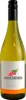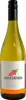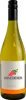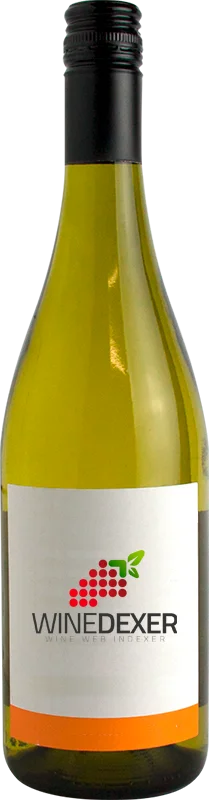
Winery Terroir MoraviaVracov-Klinky Rulandské Bílé
 White wine


This wine generally goes well with rich fish (salmon, tuna etc) and shellfish.

Food and wine pairings with Vracov-Klinky Rulandské Bílé
Pairings that work perfectly with Vracov-Klinky Rulandské Bílé


Original food and wine pairings with Vracov-Klinky Rulandské Bílé
The Vracov-Klinky Rulandské Bílé of Winery Terroir Moravia matches generally quite well with dishes of rich fish (salmon, tuna etc) or shellfish such as recipes of quebec style barbecued salmon or flying with the wind of the seas.
Details and technical informations about Winery Terroir Moravia's Vracov-Klinky Rulandské Bílé.
Discover the grape variety: Pinot blanc
Round, supple whites with a soft palate, showing discreet aromas of apple, pear, fresh almond, white flowers and brioche notes. Moderate acidity, light finish. Star of Crémant d'Alsace (fine, taut sparkling) and base of Edelzwicker. Grown in Germany (Weissburgunder, Baden-Württemberg), northern Italy (Pinot Bianco, Alto Adige), Austria and Luxembourg. A white mutation of Pinot Noir.
Last vintages of this wine
The best vintages of Vracov-Klinky Rulandské Bílé from Winery Terroir Moravia are 2015, 0
Informations about the Winery Terroir Moravia
The Winery Terroir Moravia is one of of the world's greatest estates. It offers 9 wines for sale in the of Morava to come and discover on site or to buy online.

The wine region of Morava
Predominantly white region, lively and mineral: crisp, peppery Grüner Veltliner, taut Riesling with citrus, supple, floral Müller-Thurgau, aromatic Pálava, the local signature (muscat, white flowers). More discreet reds: spicy Frankovka (Blaufränkisch) with black fruits, fine, silky Saint Laurent. Temperate continental climate, 4 sub-regions: Mikulov, Velké Pavlovice, Znojmo, Slovácko. ~96% of the Czech vineyard, 73 grapes grown.
The word of the wine: Reduction
A physiological and chemical phenomenon that occurs in wine in the absence of oxygen. The smell of reduction is characterized by animal and sometimes fetid notes that disappear in principle with aeration. It is recommended to decant reduced wines.