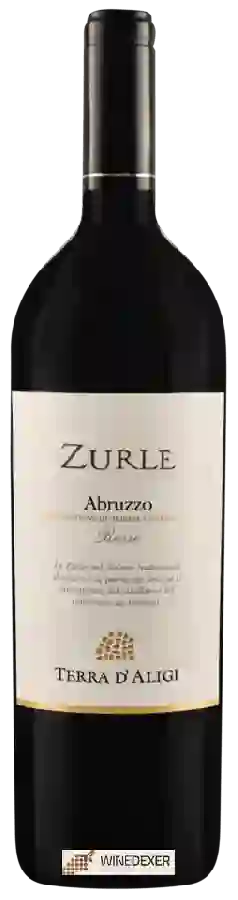
Winery Terra d'AligiZurle Abruzzo Rosso
 Red wine



In the mouth this red wine is a powerful with a lot of tannins present in the mouth.
This wine generally goes well with poultry, beef or veal.
Taste structure of the Zurle Abruzzo Rosso from the Winery Terra d'Aligi
Light | Bold | |
Smooth | Tannic | |
Dry | Sweet | |
Soft | Acidic |
In the mouth the Zurle Abruzzo Rosso of Winery Terra d'Aligi in the region of Abruzzo is a powerful with a lot of tannins present in the mouth.
Wine flavors and olphactive analysis


On the nose the Zurle Abruzzo Rosso of Winery Terra d'Aligi in the region of Abruzzo often reveals types of flavors of non oak, oak or red fruit and sometimes also flavors of black fruit.
Food and wine pairings with Zurle Abruzzo Rosso
Pairings that work perfectly with Zurle Abruzzo Rosso



Original food and wine pairings with Zurle Abruzzo Rosso

The Zurle Abruzzo Rosso of Winery Terra d'Aligi matches generally quite well with dishes of beef, pasta or veal such as recipes of beef with mustard, lasagne with salmon, goat cheese and spinach or tournedos rossini with port sauce.
Details and technical informations about Winery Terra d'Aligi's Zurle Abruzzo Rosso.
Discover the grape variety: Dolcetto
Last vintages of this wine
The best vintages of Zurle Abruzzo Rosso from Winery Terra d'Aligi are 2015, 2014, 0, 2013
Informations about the Winery Terra d'Aligi
The Winery Terra d'Aligi is one of of the world's greatest estates. It offers 25 wines for sale in the of Abruzzo to come and discover on site or to buy online.

The wine region of Abruzzo
Accessible, identity-driven Italian duo. Montepulciano d'Abruzzo as red: deep colour, intense aromas of black cherry, ripe plum, sweet spices and balsamic notes, round tannins and a gourmet finish, from everyday to age-worthy Riserva. Cerasuolo d'Abruzzo DOCG as a fleshy, fruity rosé (strawberry, pomegranate). Trebbiano d'Abruzzo as a straight white with citrus and white flowers, sublimated by a few cult producers (Valentini).
The word of the wine: Sweet
Generic term for wines containing residual sugar (natural sugars in the grapes that have not been transformed into alcohol). It is also used to describe a wine with a dominantly sweet flavour, without further explanation.