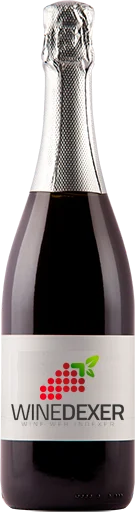
Winery Tenuta PerniceOrtrugo Frizzante
 Sparkling wine



This wine generally goes well with
Details and technical informations about Winery Tenuta Pernice's Ortrugo Frizzante.
Discover the grape variety: Subéreux
An interspecific cross made by Albert Seibel (1844-1936) between 4595 Seibel and 4199 Seibel. Little cultivated, it was used as a progenitor in obtaining direct producer hybrids known as Villard blanc, Villard noir, Vignoles, ... .
Last vintages of this wine
The best vintages of Ortrugo Frizzante from Winery Tenuta Pernice are 2016
Informations about the Winery Tenuta Pernice
The Winery Tenuta Pernice is one of of the world's greatest estates. It offers 20 wines for sale in the of Colli Piacentini to come and discover on site or to buy online.

The wine region of Colli Piacentini
The wine region of Colli Piacentini is located in the region of Émilie-Romagne of Italy. Wineries and vineyards like the Domaine Marcus Aurelius or the Domaine Luretta produce mainly wines sparkling, red and white. The most planted grape varieties in the region of Colli Piacentini are Cabernet-Sauvignon, Chardonnay and Marsanne, they are then used in wines in blends or as a single variety. On the nose of Colli Piacentini often reveals types of flavors of oaky, tree fruit or vegetal and sometimes also flavors of lychee, mango or orange.
The wine region of Emilia-Romagna
Romagna/emilia">Emilia-Romagna is a Rich and fertile region in Northern Italy, and one of the country's most prolific wine-producing regions, with over 58,000 hectares (143,320 acres) of vines in 2010. It is 240 kilometers (150 miles) wide and stretches across almost the entire northern Italian peninsula, sandwiched between Tuscany to the South, Lombardy and Veneto to the north and the Adriatic Sea to the east. Nine miles of Liguria is all that separates Emilia-Romagna from the Ligurian Sea, and its uniqueness as the only Italian region with both an east and west coast. Emilia-Romagna's wine-growing heritage dates back to the seventh century BC, making it one of the oldest wine-growing regions in Italy.
The word of the wine: Oenologist
Specialist in wine-making techniques. It is a profession and not a passion: one can be an oenophile without being an oenologist (and the opposite too!). Formerly attached to the Faculty of Pharmacy, oenology studies have become independent and have their own university course. Learning to make wine requires a good chemical background but also, increasingly, a good knowledge of the plant. Some oenologists work in laboratories (analysis). Others, the consulting oenologists, work directly in the properties.