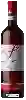
Winery Tenuta MarengoEgo Sum Barbera d'Asti Superiore
 wine
wine
This wine generally goes well with
The Ego Sum Barbera d'Asti Superiore of the Winery Tenuta Marengo is in the top 0 of wines of Barbera d'Asti.
Details and technical informations about Winery Tenuta Marengo's Ego Sum Barbera d'Asti Superiore.
Discover the grape variety: Rondo
An interspecific cross between Zarya Severa (Sayanets Malengra x Amurensis) - a Russian variety - and Saint Laurent, obtained in 1964 by Vilem Kraus (Czech Republic) and then tested at the Geisenheim Research Institute (Germany). It can be found in Germany, Denmark, the Netherlands, Belgium, England, Ireland and Switzerland, but is virtually unknown in France.
Informations about the Winery Tenuta Marengo
The Winery Tenuta Marengo is one of of the world's greatest estates. It offers 4 wines for sale in the of Barbera d'Asti to come and discover on site or to buy online.

The wine region of Barbera d'Asti
The wine region of Barbera d'Asti is located in the region of Piémont of Italy. Wineries and vineyards like the Domaine Coppo or the Domaine Luigi Spertino produce mainly wines red. On the nose of Barbera d'Asti often reveals types of flavors of cream, dark fruit or cassis and sometimes also flavors of caramel, raisin or stone. In the mouth of Barbera d'Asti is a powerful with a nice freshness.
The wine region of Piedmont
Piedmont (Piemonte) holds an unrivalled place among the world's finest wine regions. Located in northwestern Italy, it is home to more DOCG wines than any other Italian region, including such well-known and respected names as Barolo, Barbaresco and Barbera d'Asti. Though famous for its Austere, Tannic, Floral">floral reds made from Nebbiolo, Piedmont's biggest success story in the past decade has been Moscato d'Asti, a Sweet, Sparkling white wine. Piedmont Lies, as its name suggests, at the foot of the Western Alps, which encircle its northern and western sides and form its naturally formidable border with Provence, France.
The word of the wine: Terroir
Strictly speaking, the notion of terroir corresponds to the geological characteristics of a vineyard. However, when we talk about terroir, we take into account the soil, the climate (even the microclimate), the flora, the fauna, and the human factor that characterizes the practices that make up the art of the craft.