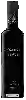
Winery StrawhouseThe Black Pig
 Red wine
In the mouth this red wine is a powerful with a lot of tannins present in the mouth.
This wine generally goes well with poultry, beef or game (deer, venison).
Taste structure of the The Black Pig from the Winery Strawhouse
Light | Bold | |
Smooth | Tannic | |
Dry | Sweet | |
Soft | Acidic |
In the mouth the The Black Pig of Winery Strawhouse in the region of Nouvelle-Galles du Sud is a powerful with a lot of tannins present in the mouth.
Food and wine pairings with The Black Pig
Pairings that work perfectly with The Black Pig



Original food and wine pairings with The Black Pig

The The Black Pig of Winery Strawhouse matches generally quite well with dishes of beef, lamb or game (deer, venison) such as recipes of provencal stew, rolled lamb shoulder with herbs or duck aiguillettes with basalmic.
Details and technical informations about Winery Strawhouse's The Black Pig.
Discover the grape variety: Cabernet-Mitos
An intraspecific cross between Cabernet Sauvignon and Dyer du Cher obtained in 1970 in Weinsberg, Germany. It can be found in Germany, Switzerland, etc. and is virtually unknown in France.
Informations about the Winery Strawhouse
The Winery Strawhouse is one of of the world's greatest estates. It offers 2 wines for sale in the of Nouvelle-Galles du Sud to come and discover on site or to buy online.

The wine region of Nouvelle-Galles du Sud
The NewSouthWales wine appellation is made up of 16 different regions and covers approximately 810,000 square kilometres (312,000 square miles). This is the Size of the state of New South Wales, one of the six that make up the federal Commonwealth of Australia. Although it is one of the smallest Australian states geographically, it has been the most populous since the first European settlements in the 18th century. The South East Australia GI area is the largest in Australia and can include any wine produced in New South Wales as well as Victoria, Tasmania and Parts of South Australia.
The word of the wine: Hat
Solid part (marc), composed of pips and skins (sometimes of the stalk), which forms at the top of the tank during fermentation. The pigeage consists in breaking this cap to put back in suspension these elements and to favour the exchanges between the juice and the skins.