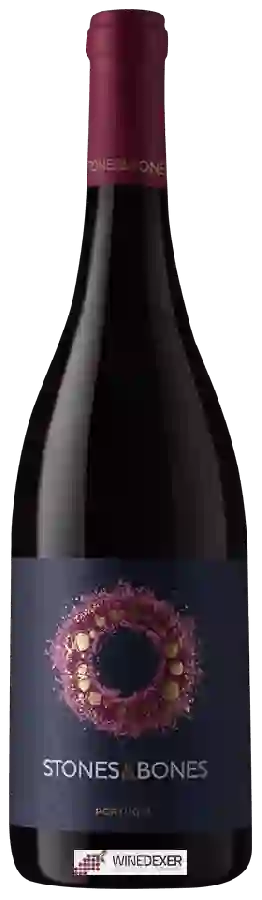
Winery Stones & BonesTinto
 Red wine


In the mouth this red wine is a powerful with a nice freshness.
This wine generally goes well with poultry, beef or veal.
The Tinto of the Winery Stones & Bones is in the top 70 of wines of Lisboa.

Taste structure of the Tinto from the Winery Stones & Bones
Light | Bold | |
Smooth | Tannic | |
Dry | Sweet | |
Soft | Acidic |
In the mouth the Tinto of Winery Stones & Bones in the region of Lisboa is a powerful with a nice freshness.
Wine flavors and olphactive analysis






On the nose the Tinto of Winery Stones & Bones in the region of Lisboa often reveals types of flavors of non oak, earth or microbio and sometimes also flavors of vegetal, oak or tree fruit.
Food and wine pairings with Tinto
Pairings that work perfectly with Tinto



Original food and wine pairings with Tinto

The Tinto of Winery Stones & Bones matches generally quite well with dishes of beef, pasta or veal such as recipes of tata simone's dumplings, italian pasta salad or potjevlesch (northern france).
Details and technical informations about Winery Stones & Bones's Tinto.
Discover the grape variety: Touriga nacional
Deep, concentrated reds with a near-black robe, firm but polished tannins, showing aromas of blackberry, blackcurrant, violet, bergamot, liquorice, black pepper and characteristic floral notes. Pillar of great vintage Ports (Quinta do Noval, Taylor's) and signature of modern dry Douro DOC and Dão DOC. Also exported to Australia and California. Portugal's most noble variety.
Last vintages of this wine

The best vintages of Tinto from Winery Stones & Bones are 2019, 2018, 2016, 2015 and 2014.
Informations about the Winery Stones & Bones
The Winery Stones & Bones is one of of the world's greatest estates. It offers 3 wines for sale in the of Lisboa to come and discover on site or to buy online.

The wine region of Lisboa
Vast coastal IGP north of Lisbon, Portugal's largest producer by volume. Accessible, sun-filled reds: fruity, spicy Castelão, dense Touriga Nacional (black fruit, violet), fleshy Trincadeira, deep Alicante Bouschet. Fresh, mineral whites: straight, lemony Arinto (star of Bucelas), aromatic Fernão Pires, round Vital and Malvasia. Structured reds from Alenquer, sparkling at Óbidos.
The word of the wine: Over-ripeness
Characteristic of grapes harvested late, rich in sugar, which give wines often mellow and marked by candied aromas.


