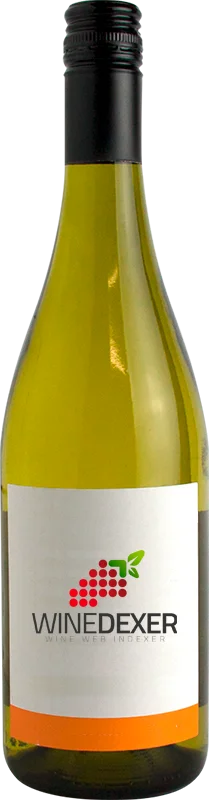
Winery ŠtamparGraševina
 White wine
This wine generally goes well with
Details and technical informations about Winery Štampar's Graševina.
Discover the grape variety: Saint Pierre doré
Belonging to the Estaing wines, the Saint Pierre doré is also called Roussellou. With an average budding, this variety is presented in the form of full, winged, elongated and very large bunches, with pulpy, spherical and medium-sized berries. When ripe, the fruit is golden-white in colour, with bronze leaves, which may be three-lobed or whole. The red colour is also found on the internodes of its herbaceous branch. For best results, a fairly long pruning will suit the Saint Pierre Doré, which is not overly afraid of oidium or mildew, but more afraid of grey rot. The characteristics of the roussellou mean that it could play a major role in the production of sparkling wines. The vine does indeed give a very acidic taste, not very sweet and with low degree aromas. It has been noted that the extent of the vineyard recorded in 1958 is 123 Ha, to be reduced to 1 Ha in 1994 on the French territory.
Informations about the Winery Štampar
The Winery Štampar is one of of the world's greatest estates. It offers 9 wines for sale in the of Continental Region to come and discover on site or to buy online.

The wine region of Continental Region
Hungary/Eger/matra">Mátra is a PDO wine region in Northern Central Hungary with Vineyards dotting the lower slopes of the Mátra mountain range, Part of the North Hungarian Mountains. The region is known for its Aromatic whites and, in smaller volumes, well structured red wines. The proncipal white Grape varieties grown here are Rizlingzilváni, Chasselas, Muscat Ottonel, Olaszriesling (Welschriesling), Chardonnay, Irsay Oliver and Tramini (Traminer). Kékfrankos dominates red wine here, having usurped Kadarka.
The word of the wine: Extraction
All the methods (pumping over, punching down) that allow the colour and tannins to be extracted from the grape skin during maceration, before fermentation begins. It is also possible to macerate after fermentation, but gently, so as not to extract the tannins from the seeds, which are greener. Because of its solvent power, alcohol favours extraction.