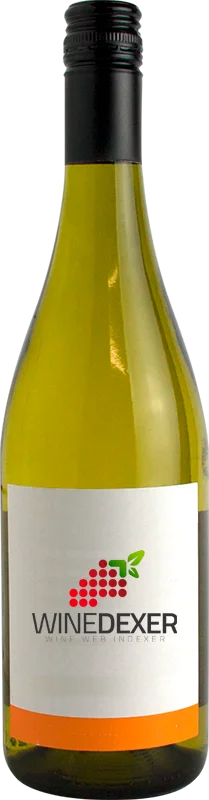
Winery St LupinSauvignon Blanc
 White wine
In the mouth this white wine is a .
This wine generally goes well with vegetarian, poultry or lean fish.
Taste structure of the Sauvignon Blanc from the Winery St Lupin
Light | Bold | |
Dry | Sweet | |
Soft | Acidic |
In the mouth the Sauvignon Blanc of Winery St Lupin in the region of Languedoc-Roussillon is a .
Food and wine pairings with Sauvignon Blanc
Pairings that work perfectly with Sauvignon Blanc



Original food and wine pairings with Sauvignon Blanc


The Sauvignon Blanc of Winery St Lupin matches generally quite well with dishes of pasta, vegetarian or poultry such as recipes of fettuccine with cream and cheese, cream and tuna quiche or moroccan chicken tagine.
Details and technical informations about Winery St Lupin's Sauvignon Blanc.
Discover the grape variety: Villard blanc
Interspecific crossing between 6468 Seibel and 6905 Seibel or subéreux, obtained by the House of Seyve-Villard of Saint Vallier in the Drôme. Together with Villard noir or 18315 Seyve-Villard, these were the two most widely propagated direct-producing hybrids. The white Villard has also been used as a progenitor for new varieties. It can be found in Hungary, Mexico, Brazil, Canada, the United States and Japan. In the south of France, some old vines still exist. We have also found it in private homes where it is grown in pergolas for the consumption of its excellent grapes at full maturity. Today, it is on the verge of extinction, although it is registered in the Official Catalogue of wine grape varieties, list A1.
Informations about the Winery St Lupin
The Winery St Lupin is one of of the world's greatest estates. It offers 3 wines for sale in the of Languedoc-Roussillon to come and discover on site or to buy online.

The wine region of Languedoc-Roussillon
Languedoc (formerly Coteaux du Languedoc) is a key appellation used in the Languedoc-Roussillon wine region of southern France. It covers Dry table wines of all three colors (red, white and rosé) from the entire region, but leaves Sweet and Sparkling wines to other more specialized appellations. About 75% of all Languedoc wines are red, with the remaining 25% split roughly down the middle between whites and rosés. The appellation covers most of the Languedoc region and almost a third of all the vineyards in France.
The word of the wine: Density per hectare
Number of vines per hectare. For the same yield, a vine planted with 3,000 vines per hectare bears many more bunches (per vine) than a vine planted with 10,000. The grapes will therefore be less rich in sugar and polyphenols (tannins, aromas...).