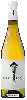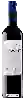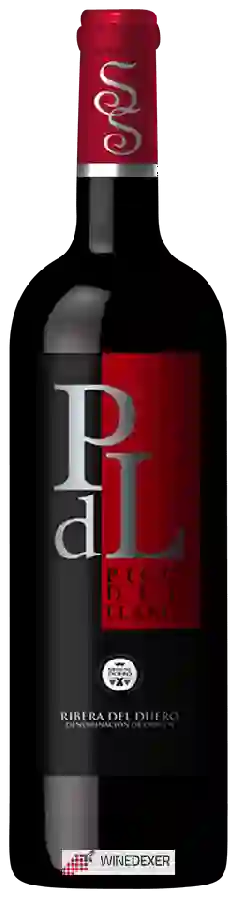
Winery Severino SanzPico del Llano
 Red wine


In the mouth this red wine is a powerful.
This wine generally goes well with poultry, beef or veal.

Taste structure of the Pico del Llano from the Winery Severino Sanz
Light | Bold | |
Smooth | Tannic | |
Dry | Sweet | |
Soft | Acidic |
In the mouth the Pico del Llano of Winery Severino Sanz in the region of Castille-et-Léon is a powerful.
Food and wine pairings with Pico del Llano
Pairings that work perfectly with Pico del Llano



Original food and wine pairings with Pico del Llano

The Pico del Llano of Winery Severino Sanz matches generally quite well with dishes of beef, pasta or veal such as recipes of flemish beer stew, salmon lasagna or bacon and mushroom tagliatelle.
Details and technical informations about Winery Severino Sanz's Pico del Llano.
Discover the grape variety: Tempranillo
Elegant, structured reds with aromas of strawberry, cherry, plum, leather, blond tobacco and pronounced vanilla from long oak ageing. Ranges from Joven to Crianza, Reserva and Gran Reserva. Star of Rioja DOCa, Ribera del Duero DO and Toro DO, also shines in the Douro as Tinta Roriz/Aragonez. One of the world's most planted Spanish varieties.
Last vintages of this wine
The best vintages of Pico del Llano from Winery Severino Sanz are 2014, 2016, 0
Informations about the Winery Severino Sanz
The Winery Severino Sanz is one of of the world's great estates. It offers 11 wines for sale in the of Ribera del Duero to come and discover on site or to buy online.

The wine region of Ribera del Duero
Cradle of great modern Spanish reds: Tempranillo (95% of the vineyard, here Tinto Fino) powerful, deep and elegant with notes of black cherry, blackberry, candied plum, leather, cedar and spices, firm tannins and sustained acidity thanks to altitude (720-1100 m). Classification by age: Crianza, Reserva, Gran Reserva. Harsh continental climate, clay-limestone soils. DO since 1982, 19,000 ha in Castilla y León.
The wine region of Castille-et-Léon
Cradle of great Castilian reds on high-altitude plateaus (450-1000 m) of the Duero. Tempranillo king (Tinto Fino, Tinta de Toro): powerful, structured reds with notes of black cherry, blackberry, plum, leather and spices, firm tannins and length worthy of long ageing. Stars: Ribera del Duero (Vega Sicilia, Pingus), fleshy Toro, Bierzo (fresh mineral Mencía). Lively herbaceous Verdejo whites from Rueda, cut grass and citrus.
The word of the wine: Performance
Quantity of grapes harvested per hectare. In AOC, the average yield is limited on the proposal of the appellation syndicate, validated by the Inao. The use of high-performance plant material (especially clones) and better control of vine diseases have increased yields. This is not without consequences on the quality of the wines (dilution) and on the state of the market (too much wine). We must not over-simplify: low yields are not synonymous with quality, and it is often in years with generous harvests that we find the greatest vintages (1982 and 1986 in Bordeaux, 1996 in Champagne, 1990 and 2005 in Burgundy...).