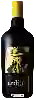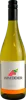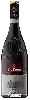
Winery SereneSaghé
 Red wine


In the mouth this red wine is a powerful.
This wine generally goes well with beef, game (deer, venison) or lamb.
Taste structure of the Saghé from the Winery Serene
Light | Bold | |
Smooth | Tannic | |
Dry | Sweet | |
Soft | Acidic |
In the mouth the Saghé of Winery Serene in the region of Veneto is a powerful.
Food and wine pairings with Saghé
Pairings that work perfectly with Saghé



Original food and wine pairings with Saghé

The Saghé of Winery Serene matches generally quite well with dishes of beef, pasta or lamb such as recipes of beef stew express, mascarpone pasta with tomato sauce or royal couscous (lamb, chicken, merguez).
Details and technical informations about Winery Serene's Saghé.
Discover the grape variety: Corvina
Its precise origin is unknown, it has been cultivated for a very long time in northern Italy. It can be found in Switzerland, Australia, Argentina, ... in France it is almost unknown. It should not be confused with the Corvinone, another Italian grape variety. It should be noted that the Corvina is related to the Rondinella and the Refosco dal Peduncolo rosso.
Last vintages of this wine
The best vintages of Saghé from Winery Serene are 2011, 2015, 0
Informations about the Winery Serene
The Winery Serene is one of of the world's greatest estates. It offers 18 wines for sale in the of Rosso Veronese to come and discover on site or to buy online.

The wine region of Rosso Veronese
The wine region of Rosso Veronese is located in the region of Verona of Vénétie of Italy. Wineries and vineyards like the Domaine Bussola or the Domaine Fratelli Vogadori produce mainly wines red, white and sweet. The most planted grape varieties in the region of Rosso Veronese are Corvina, Rondinella and Cabernet-Sauvignon, they are then used in wines in blends or as a single variety. On the nose of Rosso Veronese often reveals types of flavors of cherry, orange or vegetal and sometimes also flavors of microbio, banana or mango.
The wine region of Veneto
Veneto is an important and growing wine region in northeastern Italy. Veneto is administratively Part of the Triveneto area, aLong with its smaller neighbors, Trentino-Alto Adige and Friuli-Venezia Giulia. In terms of geography, culture and wine styles, it represents a transition from the Alpine and Germanic-Slavic end of Italy to the warmer, drier, more Roman lands to the South. Veneto is slightly smaller than the other major Italian wine regions - Piedmont, Tuscany, Lombardy, Puglia and Sicily - but it produces more wine than any of them.
The word of the wine: Malolactic fermentation
Called second fermentation or malo for short. It is the degradation (under the effect of bacteria) of the malic acid naturally present in the wine into milder, less aggressive lactic acid. Some producers or wineries refuse this operation by "blocking the malo" (by cold and adding SO2) to keep a maximum of acidity which carries the aromas and accentuates the sensation of freshness.