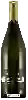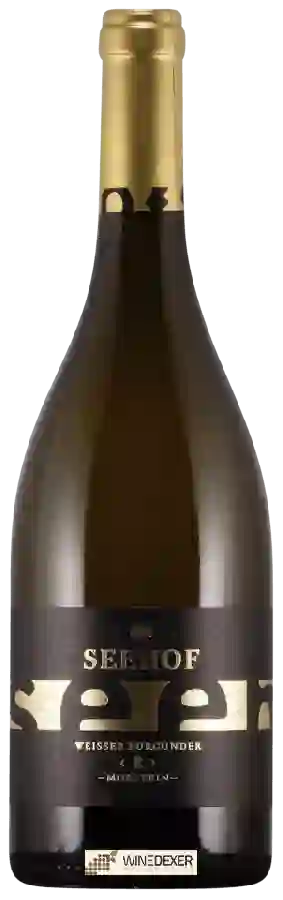
Winery SeehofWeisser Burgunder R Morstein
 White wine


In the mouth this white wine is a with a nice freshness.
This wine generally goes well with rich fish (salmon, tuna etc), shellfish or mild and soft cheese.

Taste structure of the Weisser Burgunder R Morstein from the Winery Seehof
Light | Bold | |
Dry | Sweet | |
Soft | Acidic |
In the mouth the Weisser Burgunder R Morstein of Winery Seehof in the region of Rheinhessen is a with a nice freshness.
Wine flavors and olphactive analysis


On the nose the Weisser Burgunder R Morstein of Winery Seehof in the region of Rheinhessen often reveals types of flavors of microbio.
Food and wine pairings with Weisser Burgunder R Morstein
Pairings that work perfectly with Weisser Burgunder R Morstein



Original food and wine pairings with Weisser Burgunder R Morstein

The Weisser Burgunder R Morstein of Winery Seehof matches generally quite well with dishes of rich fish (salmon, tuna etc), shellfish or mild and soft cheese such as recipes of spaghetti with tuna (real italian recipe), raoul's bouillabaisse or samoussa 3 reunionese cheeses.
Details and technical informations about Winery Seehof's Weisser Burgunder R Morstein.
Discover the grape variety: Muresconu
Structured, fruity reds with a deep ruby colour, firm tannins and a full palate with preserved acidity, showing signature aromas of black fruits (blackberry, blackcurrant) and Mediterranean spices (garrigue, myrtle). Very rare, preserved for its heritage value, this Sardinian autochthonous variety participates in confidential artisan island blends.
Last vintages of this wine

The best vintages of Weisser Burgunder R Morstein from Winery Seehof are 2018, 0, 2016
Informations about the Winery Seehof
The Winery Seehof is one of of the world's great estates. It offers 72 wines for sale in the of Rheinhessen to come and discover on site or to buy online.

The wine region of Rheinhessen
71% white region: Riesling is king (5,000 ha), dry to off-dry, ripe yellow fruit, apple, citrus and fine saline minerality. Supple, floral Müller-Thurgau for everyday, the world's largest Silvaner plantation with herbaceous, straight notes. Historic cradle of off-sweet Liebfraumilch. Some supple reds (Dornfelder, Spätburgunder).
The word of the wine: Barbarossa
A black wine and table grape variety grown in Corsica, which is used in the ajaccio appellation.