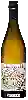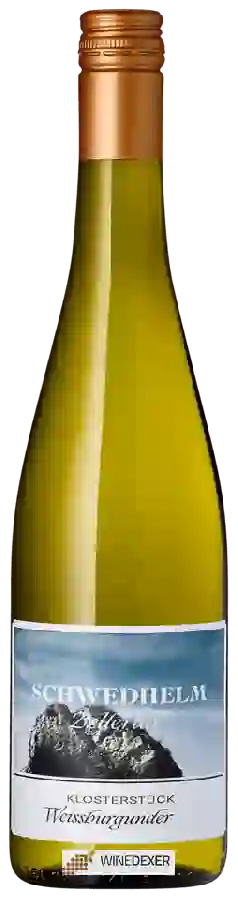
Winery Schwedhelm ZellertalKlosterstück Weissburgunder
 White wine


In the mouth this white wine is a with a nice freshness.
This wine generally goes well with rich fish (salmon, tuna etc), shellfish or mild and soft cheese.

Taste structure of the Klosterstück Weissburgunder from the Winery Schwedhelm Zellertal
Light | Bold | |
Dry | Sweet | |
Soft | Acidic |
In the mouth the Klosterstück Weissburgunder of Winery Schwedhelm Zellertal in the region of Pfalz is a with a nice freshness.
Food and wine pairings with Klosterstück Weissburgunder
Pairings that work perfectly with Klosterstück Weissburgunder



Original food and wine pairings with Klosterstück Weissburgunder

The Klosterstück Weissburgunder of Winery Schwedhelm Zellertal matches generally quite well with dishes of rich fish (salmon, tuna etc), shellfish or mild and soft cheese such as recipes of parillade of fish and seafood, blanquette of monkfish and scallops or quick smoked salmon croque-monsieur.
Details and technical informations about Winery Schwedhelm Zellertal's Klosterstück Weissburgunder.
Discover the grape variety: Hibou blanc
Simple, fresh dry whites with a pale golden colour, a supple palate with moderate acidity, and understated aromas of citrus and white flowers. Rustic and discreet profile. Nearly extinct, preserved in INRAE varietal collections; testifies to the pre-phylloxera ampelographic diversity of the South-West and studied for its genetic interest. Rare French white variety, formerly grown in the South-West.
Last vintages of this wine
The best vintages of Klosterstück Weissburgunder from Winery Schwedhelm Zellertal are 0
Informations about the Winery Schwedhelm Zellertal
The Winery Schwedhelm Zellertal is one of of the world's great estates. It offers 56 wines for sale in the of Pfalz to come and discover on site or to buy online.

The wine region of Pfalz
Fleshy, dry, fruity Riesling is the region's signature: yellow peach, apricot, ripe citrus, lovely mineral tension. Germany's largest red-wine area (40%), with silky Spätburgunder showing red fruit and spice, darker structured Dornfelder, supple Portugieser. Some rounded Pinot Blanc and Pinot Gris. A 23,640 ha vineyard along the Haardt, among Germany's warmest (>2,000 h of sun).
The word of the wine: VDQS
Delimited wine of superior quality. A level of appellation (today, barely 1% of French production) which constitutes the ultimate step before the accession to the AOC.