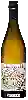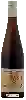
Winery SchollerBirkweiler Blank De Noirs Trocken Spatburgunder
 Red wine
In the mouth this red wine is a with a nice freshness.
This wine generally goes well with poultry, beef or veal.

Taste structure of the Birkweiler Blank De Noirs Trocken Spatburgunder from the Winery Scholler
Light | Bold | |
Smooth | Tannic | |
Dry | Sweet | |
Soft | Acidic |
In the mouth the Birkweiler Blank De Noirs Trocken Spatburgunder of Winery Scholler in the region of Pfalz is a with a nice freshness.
Food and wine pairings with Birkweiler Blank De Noirs Trocken Spatburgunder
Pairings that work perfectly with Birkweiler Blank De Noirs Trocken Spatburgunder



Original food and wine pairings with Birkweiler Blank De Noirs Trocken Spatburgunder

The Birkweiler Blank De Noirs Trocken Spatburgunder of Winery Scholler matches generally quite well with dishes of beef, veal or game (deer, venison) such as recipes of lamb skewers, veal shoulder with cream and tarragon or roast duck breast or duck fillet with dried apricots.
Details and technical informations about Winery Scholler's Birkweiler Blank De Noirs Trocken Spatburgunder.
Discover the grape variety: Cabernet franc
Supple, fragrant reds with fine tannins and vibrant freshness, showing raspberry, violet, green pepper, pencil lead and gentle spice aromas. Star of the Loire as a single variety (Chinon, Bourgueil, Saumur-Champigny) and of the right bank of Bordeaux in blends (Cheval Blanc at 60%). Also in semi-dry Anjou rosés. A historic Bordeaux variety, parent of Cabernet-Sauvignon, Merlot and Carmenère.
Informations about the Winery Scholler
The Winery Scholler is one of of the world's greatest estates. It offers 22 wines for sale in the of Pfalz to come and discover on site or to buy online.

The wine region of Pfalz
Fleshy, dry, fruity Riesling is the region's signature: yellow peach, apricot, ripe citrus, lovely mineral tension. Germany's largest red-wine area (40%), with silky Spätburgunder showing red fruit and spice, darker structured Dornfelder, supple Portugieser. Some rounded Pinot Blanc and Pinot Gris. A 23,640 ha vineyard along the Haardt, among Germany's warmest (>2,000 h of sun).
The word of the wine: Melchior
Bottle with a capacity of 18 litres.