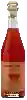
Winery SchmelzerRosé Petillant Naturel
 Sparkling wine


This wine is a blend of 2 varietals which are the Cabernet franc and the Zweigelt.
This wine generally goes well with blue cheese, pork or poultry.
Food and wine pairings with Rosé Petillant Naturel
Pairings that work perfectly with Rosé Petillant Naturel



Original food and wine pairings with Rosé Petillant Naturel



The Rosé Petillant Naturel of Winery Schmelzer matches generally quite well with dishes of beef, lamb or pork such as recipes of chinese fondue, imene's tunisian ojja or tomatoes stuffed with sausage meat.
Details and technical informations about Winery Schmelzer's Rosé Petillant Naturel.
Discover the grape variety: Cabernet franc
Cabernet Franc is one of the oldest red grape varieties in Bordeaux. The Libourne region is its terroir where it develops best. The terroirs of Saint-Emilion and Fronsac allow it to mature and develop its best range of aromas. It is also the majority in many blends. The very famous Château Cheval Blanc, for example, uses 60% Cabernet Franc. The wines produced with Cabernet Franc are medium in colour with fine tannins and subtle aromas of small red fruits and spices. When blended with Merlot and Cabernet Sauvignon, it brings complexity and a bouquet of aromas to the wine. It produces fruity wines that can be drunk quite quickly, but whose great vintages can be kept for a long time. It is an earlier grape variety than Cabernet Sauvignon, which means that it is planted as far north as the Loire Valley. In Anjou, it is also used to make sweet rosé wines. Cabernet Franc is now used in some twenty countries in Europe and throughout the world.
Last vintages of this wine
The best vintages of Rosé Petillant Naturel from Winery Schmelzer are 0
Informations about the Winery Schmelzer
The Winery Schmelzer is one of of the world's great estates. It offers 20 wines for sale in the of Burgenland to come and discover on site or to buy online.

The wine region of Burgenland
Burgenland is a large wine-producing region on the eastern border of Austria. Despite the country's image as the producer of some of the world's finest white wines, Austria is also home to a thriving red wine culture: Burgenland, with its sunny, continental summers, is the country's key red wine region, with its wines based mainly on the Blaufränkisch and Zweigelt grape varieties. Sweet, botrytized wines are also a specialty of the region, particularly in the Terroir surrounding the Neusiedlersee lake. The region occupies a narrow strip of land that runs from the Danube River down to Steiermark in the South.
The wine region of Weinland
Weinviertel DAC – whose name translates as "wine quarter" – is an appellation in Niederösterreich (Lower Austria). It is by far the largest Districtus Austriae Controllatus wine region in Austria. It was also the first Austrian wine region to be given that title, in 2002, with a DAC Reserve designation added in 2009. The designation applies only to white wines from the Grüner Veltliner Grape variety.
The word of the wine: Disgorging (champagne)
This is the evacuation of the deposit formed by the yeasts during the second fermentation in the bottle, by opening the bottle. The missing volume is completed with the liqueur de dosage - a mixture of wine and cane sugar - before the final cork is placed. For some years now, some producers have been replacing this sugar with rectified concentrated musts (concentrated grape juice) which give excellent results. A too recent dosage (less than three months) harms the gustatory harmony of the champagne.