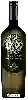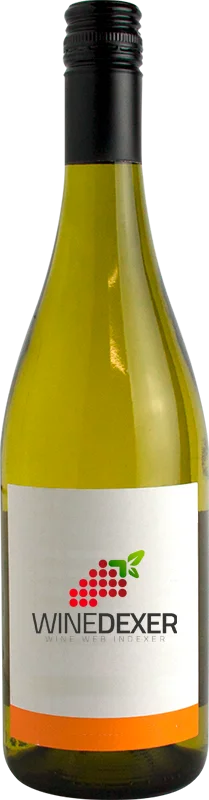
Winery SanpaoloGreco Bianco
 White wine



In the mouth this white wine is a powerful.
This wine generally goes well with vegetarian, appetizers and snacks or shellfish.

Taste structure of the Greco Bianco from the Winery Sanpaolo
Light | Bold | |
Dry | Sweet | |
Soft | Acidic |
In the mouth the Greco Bianco of Winery Sanpaolo in the region of Campania is a powerful.
Food and wine pairings with Greco Bianco
Pairings that work perfectly with Greco Bianco



Original food and wine pairings with Greco Bianco
The Greco Bianco of Winery Sanpaolo matches generally quite well with dishes of shellfish, vegetarian or appetizers and snacks such as recipes of parillade of fish and seafood, spinach and goat cheese quiche or verrine of beetroot and lump roe.
Details and technical informations about Winery Sanpaolo's Greco Bianco.
Discover the grape variety: Couderc 13
Simple, fresh dry whites with a pale golden colour, supple mouthfeel and moderate acidity, showing undemonstrative aromas of citrus and white flowers. Productive. Now marginal, surviving in a few French varietal collections as a witness to post-phylloxera hybridisation history. French white hybrid obtained by Georges Couderc in the late 19th century, in the lineage of phylloxera-resistant crossings.
Last vintages of this wine
The best vintages of Greco Bianco from Winery Sanpaolo are 2018, 2014, 0
Informations about the Winery Sanpaolo
The Winery Sanpaolo is one of of the world's greatest estates. It offers 23 wines for sale in the of Campania to come and discover on site or to buy online.

The wine region of Campania
Cradle of southern Italy's great wines on volcanic soils. Majestic Aglianico in red: structured, deep and tannic with notes of black cherry, candied plum, leather and spices, sublimated in age-worthy Taurasi DOCG, the "Barolo of the south". Identity whites of Irpinia: opulent Fiano di Avellino (honey, hazelnut), mineral iodine Greco di Tufo, aromatic Falanghina (peach, flowers). Also supple Piedirosso.
The word of the wine: Oenologist
Specialist in wine-making techniques. It is a profession and not a passion: one can be an oenophile without being an oenologist (and the opposite too!). Formerly attached to the Faculty of Pharmacy, oenology studies have become independent and have their own university course. Learning to make wine requires a good chemical background but also, increasingly, a good knowledge of the plant. Some oenologists work in laboratories (analysis). Others, the consulting oenologists, work directly in the properties.