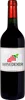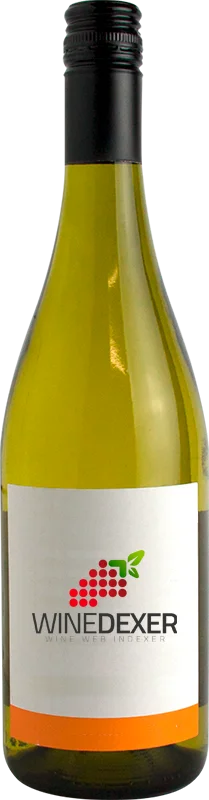
Winery SanderGrauer Burgunder
 White wine


In the mouth this white wine is a .
This wine generally goes well with pork, cured meat or mushrooms.
Taste structure of the Grauer Burgunder from the Winery Sander
Light | Bold | |
Dry | Sweet | |
Soft | Acidic |
In the mouth the Grauer Burgunder of Winery Sander in the region of Rheinhessen is a .
Food and wine pairings with Grauer Burgunder
Pairings that work perfectly with Grauer Burgunder


Original food and wine pairings with Grauer Burgunder

The Grauer Burgunder of Winery Sander matches generally quite well with dishes of pork, spicy food or mushrooms such as recipes of gratin of fresh chard (green and ribs), steak tartare or veal kidneys with mushrooms and port.
Details and technical informations about Winery Sander's Grauer Burgunder.
Discover the grape variety: Divico
Interspecific cross between gamaret and bronner obtained in 1997 by Jean-Laurent Spring at the Agroscope Research Station in Pully (Switzerland). It should be noted that the divona is issued from the same cross.
Last vintages of this wine
The best vintages of Grauer Burgunder from Winery Sander are 0
Informations about the Winery Sander
The Winery Sander is one of of the world's great estates. It offers 57 wines for sale in the of Rheinhessen to come and discover on site or to buy online.

The wine region of Rheinhessen
Rheinhessen is Germany's largest region for producing the quality wines of the Qualitätswein bestimmter Anbaugebiete (QbA) and Prädikatswein designations, with roughly 26,500 hectares (65,000 acres) of Vineyard">Vineyards as of 2014. Many of its most significant viticultural areas are favorably influenced by the Rhine river, which runs aLong its North and eastern borders. The Rhine, along with the Nahe river to the west and the Haardt mountains to its South, form a natural border. Rheinhessen covers an area south of Rheingau, north of Pfalz and east of Nahe, and is located within the Rhineland-Palatinate federal state.
The word of the wine: Assemblage (Champagne)
In Champagne, it is the art of blending still wines from different grape varieties (pinot meunier, pinot noir, chardonnay), from different terroirs (villages, areas) and often from different years. The incorporation of older wines, called reserve wines, allows for greater aromatic complexity.