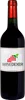
Winery Saint SardosSymbiose Rouge
 Red wine
This wine is a blend of 3 varietals which are the Cabernet franc, the Tannat and the Merlot.
This wine generally goes well with pork, poultry or beef.

Food and wine pairings with Symbiose Rouge
Pairings that work perfectly with Symbiose Rouge



Original food and wine pairings with Symbiose Rouge



The Symbiose Rouge of Winery Saint Sardos matches generally quite well with dishes of beef, lamb or pork such as recipes of empanadas de carne (argentina), lamb breast with onions and tomato sauce or potjevleesch.
Details and technical informations about Winery Saint Sardos's Symbiose Rouge.
Discover the grape variety: Cabernet franc
Supple, fragrant reds with fine tannins and vibrant freshness, showing raspberry, violet, green pepper, pencil lead and gentle spice aromas. Star of the Loire as a single variety (Chinon, Bourgueil, Saumur-Champigny) and of the right bank of Bordeaux in blends (Cheval Blanc at 60%). Also in semi-dry Anjou rosés. A historic Bordeaux variety, parent of Cabernet-Sauvignon, Merlot and Carmenère.
Informations about the Winery Saint Sardos
The Winery Saint Sardos is one of of the world's great estates. It offers 36 wines for sale in the of Saint-Sardos to come and discover on site or to buy online.

The wine region of Saint-Sardos
Southwest AOC (Tarn-et-Garonne, 2011) between Toulouse and Montauban, the only French appellation pairing Syrah and Tannat as main varieties. Syrah (≥40%) brings blackberry, violet, pepper and garrigue, velvety tannins. Tannat (≥20%) adds intense dark fruit, liquorice and a smoky note, firm tannins and ageing potential. Cabernet Franc, Merlot and Gamay complement.
The wine region of South West
French mosaic of strong identities south of Bordeaux. Cahors and its Malbec ("black wine"): deep reds with notes of blackberry, plum, violet, tobacco and cocoa, firm tannins. Madiran and its dense, age-worthy Tannat. Jurançon whites: golden sweet (apricot, honey, pineapple) and lively dry from Petit Manseng.
The word of the wine: White winemaking
White wines are obtained by fermentation of the juice after pressing. A pre-fermentation maceration is sometimes practiced to extract the aromatic substances from the skins. White wines are normally made from white grapes, but can also be made from red grapes (blanc de noirs). The grapes are then pressed as soon as they arrive at the vat house without maceration in order to prevent the colouring matter contained in the skins from "staining" the wine.