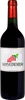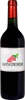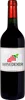
Cave Saint DésiratLe Claux St. Joseph
 Red wine



In the mouth this red wine is a powerful with a nice balance between acidity and tannins.
This wine generally goes well with poultry, beef or game (deer, venison).

Taste structure of the Le Claux St. Joseph from the Cave Saint Désirat
Light | Bold | |
Smooth | Tannic | |
Dry | Sweet | |
Soft | Acidic |
In the mouth the Le Claux St. Joseph of Cave Saint Désirat in the region of Rhone Valley is a powerful with a nice balance between acidity and tannins.
Food and wine pairings with Le Claux St. Joseph
Pairings that work perfectly with Le Claux St. Joseph



Original food and wine pairings with Le Claux St. Joseph

The Le Claux St. Joseph of Cave Saint Désirat matches generally quite well with dishes of beef, lamb or game (deer, venison) such as recipes of sauté of lamb with curry, thomas's shoulder of lamb or deer stew.
Details and technical informations about Cave Saint Désirat's Le Claux St. Joseph.
Discover the grape variety: St. Laurent
Structured and elegant reds with a deep ruby colour, soft to firm tannins and silky palate, with signature aromas of red fruit (cherry, raspberry), morello cherry (hallmark), sweet spices, undergrowth and floral notes reminiscent of Pinot Noir. Fine ageing potential. Star of the great reds of the Austrian Burgenland, also grown in the Czech Republic. The German synonym for Saint Laurent, an indigenous Austrian black variety genetically related to Pinot Noir.
Last vintages of this wine
The best vintages of Le Claux St. Joseph from Cave Saint Désirat are 2016
Informations about the Cave Saint Désirat
The Cave Saint Désirat is one of of the world's great estates. It offers 77 wines for sale in the of Saint-Joseph to come and discover on site or to buy online.

The wine region of Saint-Joseph
Northern Rhône cru on the right bank (Ardèche, Loire): signature Syrah as the exclusive king red - refined and structured with notes of black fruits (blackcurrant, blackberry), raspberry, violet, pepper, spices, liquorice and an undergrowth touch, softer tannins than Cornas or Hermitage, seductive fruit-structure balance. Marsanne and Roussanne in ample whites (peach, apricot, honey, white flowers). AOC (1956) over 26 communes, south-facing slopes, granite, schist and gneiss. Ageing 3-10 years.
The wine region of Rhone Valley
France's 2nd-largest AOC vineyard, two complementary worlds. Northern: pure Syrah in signature reds (Côte-Rôtie, Hermitage, Cornas), deep and peppery with blackberry, violet, black olive and smoked bacon notes, exceptional ageing. Opulent Viognier whites (Condrieu, apricot, flowers) and ample Marsanne-Roussanne. Southern: sun-soaked Grenache blends at Châteauneuf, Gigondas, Vacqueyras (candied fruit, garrigue).
The word of the wine: Presses
The juice that results from pressing the grapes after fermentation. At the end of the maceration, the vats are emptied, the first juice obtained is called the free-run wine and the marc remaining at the bottom of the vat is then pressed to give the press wine. We say more quickly "the presses". Their quality varies according to the vintage and the maceration. A too vigorous extraction releases the tannins of pips and the wine of press can then prove to be very astringent. Often the winemaker raises it separately, deciding later whether or not to incorporate it totally or partially into the grand vin.