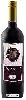
Winery RoskildePuglia Salento Malnera Negroamaro Malvasia Nera
 wine
wine
This wine generally goes well with
The Puglia Salento Malnera Negroamaro Malvasia Nera of the Winery Roskilde is in the top 0 of wines of Salento.
Details and technical informations about Winery Roskilde's Puglia Salento Malnera Negroamaro Malvasia Nera.
Discover the grape variety: Castets
Castets noir is a grape variety that originated in France (South West). It produces a variety of grape specially used for wine making. It is rare to find this grape to eat on our tables. This variety of grape is characterized by medium to large bunches, and small grapes. Castets noir can be found cultivated in these vineyards: South West, Cognac, Bordeaux, Provence & Corsica, Rhone Valley.
Informations about the Winery Roskilde
The Winery Roskilde is one of of the world's greatest estates. It offers 2 wines for sale in the of Salento to come and discover on site or to buy online.

The wine region of Salento
The wine region of Salento is located in the region of Pouilles of Italy. We currently count 851 estates and châteaux in the of Salento, producing 2704 different wines in conventional, organic and biodynamic agriculture. The wines of Salento go well with generally quite well with dishes .
The wine region of Puglia
Puglia (Apulia to many English speakers) is a Long, slender wine region in the extreme Southeast corner of Italy's "boot". To use the shoe analogy often used to illustrate the shape of Italy, Apulia extends from the tip of the heel to the mid-calf, where the spur of the Gargano Peninsula juts out into the Adriatic Sea. The heel (the Salento peninsula) occupies the southern half of the region and is of great importance for the identity of Puglia. Not only are there cultural and geographical differences from Northern Puglia, but the wines are also different.
The word of the wine: Terroir
Strictly speaking, the notion of terroir corresponds to the geological characteristics of a vineyard. However, when we talk about terroir, we take into account the soil, the climate (even the microclimate), the flora, the fauna, and the human factor that characterizes the practices that make up the art of the craft.