The Domaine Rosier of Languedoc of Languedoc-Roussillon
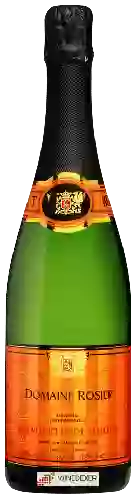
Domaine Rosier
The winery offers 23 different wines
3.7


Note - 1Note - 1Note - 1Note - 0.5Note - 0
Its wines get an average rating of 3.7.
It is ranked in the top 584 of the estates of Languedoc-Roussillon.
It is located in Languedoc in the region of Languedoc-Roussillon
Find the Domaine Rosier on Facebook

The Domaine Rosier is one of the best wineries to follow in Languedoc.. It offers 23 wines for sale in of Languedoc to come and discover on site or to buy online.
Top Domaine Rosier wines

Looking for the best Domaine Rosier wines in Languedoc among all the wines in the region? Check out our tops of the best red, white or effervescent Domaine Rosier wines. Also find some food and wine pairings that may be suitable with the wines from this area. Learn more about the region and the Domaine Rosier wines with technical and enological descriptions.

The top sparkling wines of Domaine Rosier

Food and wine pairings with a sparkling wine of Domaine Rosier

How Domaine Rosier wines pair with each other generally quite well with dishes of pork, rich fish (salmon, tuna etc) or vegetarian such as recipes of the secrets of croque-monsieur, rice croquettes with salmon or quiche lorraine.

Organoleptic analysis of sparkling wines of Domaine Rosier

On the nose the sparkling wine of Domaine Rosier. often reveals types of flavors of cream, peach or green apple and sometimes also flavors of pear, toasty or honey. In the mouth the sparkling wine of Domaine Rosier. is a with a nice vivacity and a fine and pleasant bubble.

The best vintages in the sparkling wines of Domaine Rosier

  • 2017With an average score of 4.03/5
  • 0With an average score of 3.80/5
  • 2015With an average score of 3.74/5
  • 2014With an average score of 3.73/5
  • 2013With an average score of 3.71/5
  • 2011With an average score of 3.70/5

The grape varieties most used in the sparkling wines of Domaine Rosier.

  • Chardonnay
  • Mauzac Blanc
  • Pinot Noir
  • Chenin Blanc
  • Pinot Blanc
  • Pinot Meunier

Discovering the wine region of Languedoc

Languedoc (formerly Coteaux du Languedoc) is a key appellation used in the Languedoc-Roussillon wine region of southern France. It covers Dry table wines of all three colors (red, white and rosé) from the entire region, but leaves Sweet and Sparkling wines to other more specialized appellations. About 75% of all Languedoc wines are red, with the remaining 25% split roughly down the middle between whites and rosés. The appellation covers most of the Languedoc region and almost a third of all the vineyards in France.

The typical Languedoc red wine is medium-bodied and Fruity. The best examples are slightly heavier and have darker, more savoury aromas, with notes of spice, undergrowth and leather. The Grape varieties used to make them are the classic southern French ones: Grenache, Syrah and Mourvèdre, often with a touch of Carignan or Cinsaut. The white wines of the appellation are made from Grenache Blanc, Clairette and Bourboulenc, with occasional use of Viognier, Marsanne and Roussanne from the Rhône Valley.

The top white wines of Domaine Rosier

Food and wine pairings with a white wine of Domaine Rosier

How Domaine Rosier wines pair with each other generally quite well with dishes of pasta, vegetarian or poultry such as recipes of pasta gratin carbonara style, mushroom, bacon and gruyere quiche or chicken curry with coconut milk and cashew nuts.

Organoleptic analysis of white wines of Domaine Rosier

In the mouth the white wine of Domaine Rosier. is a .

The best vintages in the white wines of Domaine Rosier

  • 2015With an average score of 3.90/5
  • 2016With an average score of 3.80/5
  • 2018With an average score of 3.70/5
  • 2017With an average score of 3.20/5

The grape varieties most used in the white wines of Domaine Rosier.

  • Chardonnay

Discover the grape variety: Chenin blanc

It most certainly originates from the Anjou region and is registered in the official catalogue of wine grape varieties on the A1 list. It can also be found in South Africa, Australia, Argentina, Chile, the United States (California), New Zealand, etc. It is said to be a descendant of Savagnin and to have sauvignonasse as its second parent (Jean-Michel Boursiquot 2019). On the other hand, Chenin blanc is the half-brother of verdelho and sauvignon blanc and is the father of colombard.

The top red wines of Domaine Rosier

Food and wine pairings with a red wine of Domaine Rosier

How Domaine Rosier wines pair with each other generally quite well with dishes of beef, pasta or veal such as recipes of marinated shrimp skewers with garlic, macaroni and angel hair gratin or veal paupiettes à la bourguignonne.

The grape varieties most used in the red wines of Domaine Rosier.

  • Pinot Noir

The word of the wine: Amber

(1) A colour close to amber, sometimes taken on by white wines aged for a long time, or by oxidising prematurely. (2) A term used on the label to designate white Rivesaltes aged for at least thirty months in an oxidizing environment.

Discover other wineries and winemakers neighboring the Domaine Rosier

Planning a wine route in the of Languedoc? Here are the wineries to visit and the winemakers to meet during your trip in search of wines similar to Domaine Rosier.

Discover the grape variety: Mauzac

Mauzac is a grape variety, black or white (the white one is better known), originating from the South-West. It is mainly cultivated in the vineyards of Gaillac and Limoux (where it is called blanquette), on about 5,000 hectares. mauzac has medium-sized bunches, composed of berries whose colour can vary from green to red depending on the maturity of the grapes. This grape variety likes limestone and clay-limestone soils, and it is here that it is most productive. Its white wines are fat, with little acidity and marked by aromas of ripe apple, pear, honey, quince, vanilla and violet, typical of the great sweet wines of Gaillac. mauzac also produces the famous Blanquette-de-Limoux in rural method. In this region, Mauzac is competing with Sauvignon, Chenin and Chardonnay, especially for sparkling wines which are more similar to Champagne. It is also used in some appellations such as Entre-deux-Mers, Sainte-Foy-Bordeaux, Côtes-de-Duras, Vins-de-Lavilledieu...