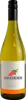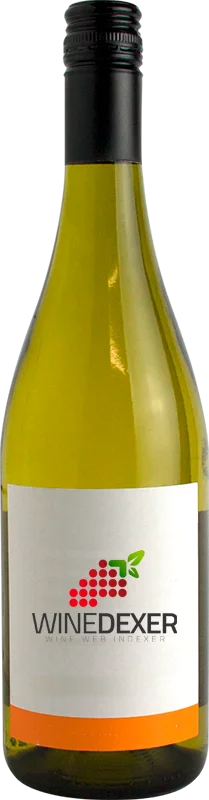
Winery Rock WallRock Hound White
 White wine
This wine is a blend of 3 varietals which are the Chardonnay, the Pinot blanc and the Pinot gris.
In the mouth this white wine is a powerful.
This wine generally goes well with pork, poultry or shellfish.
Taste structure of the Rock Hound White from the Winery Rock Wall
Light | Bold | |
Dry | Sweet | |
Soft | Acidic |
In the mouth the Rock Hound White of Winery Rock Wall in the region of California is a powerful.
Food and wine pairings with Rock Hound White
Pairings that work perfectly with Rock Hound White



Original food and wine pairings with Rock Hound White

The Rock Hound White of Winery Rock Wall matches generally quite well with dishes of pasta, pork or shellfish such as recipes of pho ga (vietnamese chicken soup), flammekueche (with laughing cow) or cataplana with seafood.
Details and technical informations about Winery Rock Wall's Rock Hound White.
Discover the grape variety: Chardonnay
The white Chardonnay is a grape variety that originated in France (Burgundy). It produces a variety of grape specially used for wine making. It is rare to find this grape to eat on our tables. This variety of grape is characterized by small bunches, and small grapes. White Chardonnay can be found in many vineyards: South West, Burgundy, Jura, Languedoc & Roussillon, Cognac, Bordeaux, Beaujolais, Savoie & Bugey, Loire Valley, Champagne, Rhone Valley, Armagnac, Lorraine, Alsace, Provence & Corsica.
Informations about the Winery Rock Wall
The Winery Rock Wall is one of of the world's great estates. It offers 95 wines for sale in the of California to come and discover on site or to buy online.

The wine region of California
California is the largest and most important wine region in the United States. It represents the southern two-thirds (850 miles or 1,370 kilometers) of the country's west coast. (Oregon and Washington make up the rest. ) The state also spans nearly 10 degrees of latitude.
The word of the wine: Food and wine pairing
It is the set of techniques that allow for the pleasant combination of food and wine. Food and wine pairing is based on a few basic principles, such as similarity, complementarity or contrast, and involves all the elements that make up the wine and the food (flavours, textures, aromas, etc.).