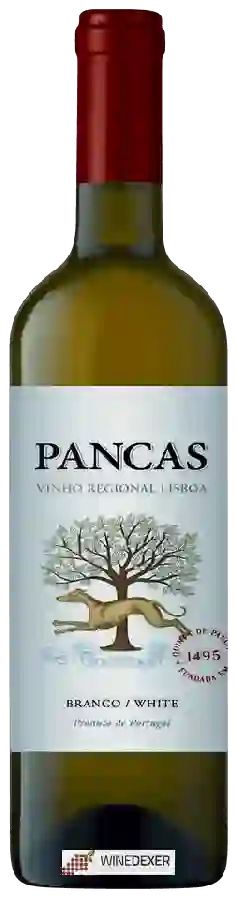
Winery Quinta de PancasBranco
 White wine


In the mouth this white wine is a with a nice freshness.
This wine generally goes well with appetizers and snacks, lean fish or shellfish.

Taste structure of the Branco from the Winery Quinta de Pancas
Light | Bold | |
Dry | Sweet | |
Soft | Acidic |
In the mouth the Branco of Winery Quinta de Pancas in the region of Lisboa is a with a nice freshness.
Wine flavors and olphactive analysis






On the nose the Branco of Winery Quinta de Pancas in the region of Lisboa often reveals types of flavors of non oak, earth or vegetal and sometimes also flavors of oak, tree fruit or spices.
Food and wine pairings with Branco
Pairings that work perfectly with Branco



Original food and wine pairings with Branco

The Branco of Winery Quinta de Pancas matches generally quite well with dishes of shellfish, appetizers and snacks or lean fish such as recipes of paella for dummies (simple and delicious), tuna and tomato mini quiches without batter or stir-fried rice cameroonian style.
Details and technical informations about Winery Quinta de Pancas's Branco.
Discover the grape variety: Chardonnay
Whites with many faces: mineral and taut at Chablis (lemon, green apple, flint), opulent and buttery at Meursault and Puligny-Montrachet (hazelnut, brioche, yellow fruits), tense and chalky in Champagne (Blanc de Blancs). Also vinified sparkling and widely exported (Sonoma, Margaret River, Casablanca). A Burgundian variety, a cross of Pinot Noir × Gouais Blanc, half-sibling of Aligoté.
Last vintages of this wine

The best vintages of Branco from Winery Quinta de Pancas are 2016, 1973, 2018, 2009 and 2019.
Informations about the Winery Quinta de Pancas
The Winery Quinta de Pancas is one of of the world's great estates. It offers 31 wines for sale in the of Lisboa to come and discover on site or to buy online.

The wine region of Lisboa
Vast coastal IGP north of Lisbon, Portugal's largest producer by volume. Accessible, sun-filled reds: fruity, spicy Castelão, dense Touriga Nacional (black fruit, violet), fleshy Trincadeira, deep Alicante Bouschet. Fresh, mineral whites: straight, lemony Arinto (star of Bucelas), aromatic Fernão Pires, round Vital and Malvasia. Structured reds from Alenquer, sparkling at Óbidos.
The word of the wine: Retrieved from
Wine that has lost its aromatic potential after prolonged aeration.