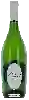
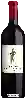
Winery PuydevalSyrah
 Red wine



In the mouth this red wine is a powerful with a nice balance between acidity and tannins.
This wine generally goes well with beef, veal or pasta.

Taste structure of the Syrah from the Winery Puydeval
Light | Bold | |
Smooth | Tannic | |
Dry | Sweet | |
Soft | Acidic |
In the mouth the Syrah of Winery Puydeval in the region of Pays d'Oc is a powerful with a nice balance between acidity and tannins.
Food and wine pairings with Syrah
Pairings that work perfectly with Syrah



Original food and wine pairings with Syrah
The Syrah of Winery Puydeval matches generally quite well with dishes of beef, pasta or veal such as recipes of fricandeaux german style, marco's pasta with bacon or calf sweetbread with mushrooms.
Details and technical informations about Winery Puydeval's Syrah.
Discover the grape variety: Villard
Simple whites or reds with a pale golden or deep ruby hue, a supple palate with moderate acidity and understated fruity aromas with discreet hybrid notes. Disease-resistant. Now marginal, they survive in a few heritage plots in France and bear witness to the post-phylloxera hybridisations of the first half of the 20th century. Synonym for the Villard Blanc and Villard Noir varieties, French hybrids obtained by Bertille Seyve in Bourgoin-Jallieu.
Informations about the Winery Puydeval
The Winery Puydeval is one of of the world's greatest estates. It offers 3 wines for sale in the of Pays d'Oc to come and discover on site or to buy online.

The wine region of Pays d'Oc
The single-grape IGP par excellence: modern, accessible, frank and fruity wines, the popular signature of the Midi. Spicy Syrah reds (pepper, blackberry), round Merlot, structured Cabernet, generous Grenache, supple Cinsault. Crisp, tangy rosés. Opulent Chardonnay whites, lively Sauvignon, floral, apricoty Viognier.
The word of the wine: Chaptalization
The addition of sugar at the time of fermentation of the must, an ancient practice, but theorized by Jean-Antoine Chaptal at the dawn of the 19th century. The sugar is transformed into alcohol and allows the natural degree of the wine to be raised in a weak or cold year, or - more questionably - when the winegrower has a harvest that is too large to obtain good maturity.