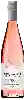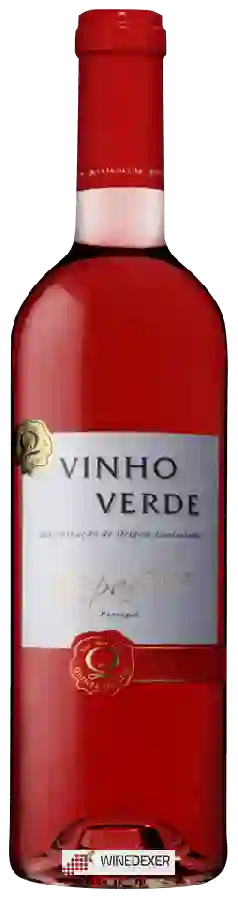
Winery Quinta da LixaEspadeiro
 Pink wine



This wine generally goes well with
Wine flavors and olphactive analysis




On the nose the Espadeiro of Winery Quinta da Lixa in the region of Minho often reveals types of flavors of non oak, earth or microbio and sometimes also flavors of vegetal, oak or tree fruit.
Details and technical informations about Winery Quinta da Lixa's Espadeiro.
Discover the grape variety: Flame seedless
Apyrene variety of table grapes obtained in 1961 in the United States (California) by John H. Weinberger and F.N. Harmon by complex crossing between (cardinal x sultanin) x [(molinera gorda x tifafihi ahmer ) x (muscat of Alexandria x sultanin)] and put in culture in 1973. It should be noted that the white Fresno seedless is the result of the same cross made by the same breeders. It can be found in Australia, Chile, Argentina, South Africa, Morocco, Tunisia, Spain, Portugal, Italy, Bulgaria, the United States (California) where it occupies a large area, etc. In France it is practically unknown, although it is registered in the Official Catalogue of table grape varieties, list A2.
Last vintages of this wine
The best vintages of Espadeiro from Winery Quinta da Lixa are 2008, 2019, 2018, 2017 and 2013.
Informations about the Winery Quinta da Lixa
The Winery Quinta da Lixa is one of of the world's great estates. It offers 84 wines for sale in the of Vinho Verde to come and discover on site or to buy online.

The wine region of Vinho Verde
The wine region of Vinho Verde is located in the region of Minho of Portugal. We currently count 535 estates and châteaux in the of Vinho Verde, producing 1615 different wines in conventional, organic and biodynamic agriculture. The wines of Vinho Verde go well with generally quite well with dishes .
The wine region of Minho
Minho is Portugal's Northernmost wine region. It is known for one wine style above all others: crisp, light, white Vinho Verde, whose DOC zone covers the same territory. The Minho name is used for the area's Vinho Regional designation (similar to the French IGP). The latter's looser production laws allow more diversity in the average winery's portfolio, including red and rosé wines.
The word of the wine: Grape
Fruit of the vine in the form of bunches of grapes, also called berries, attached to the stalk. The grapes used to make wine are known as grape varieties, a generic word that designates many types of vine plant with their own characteristics.