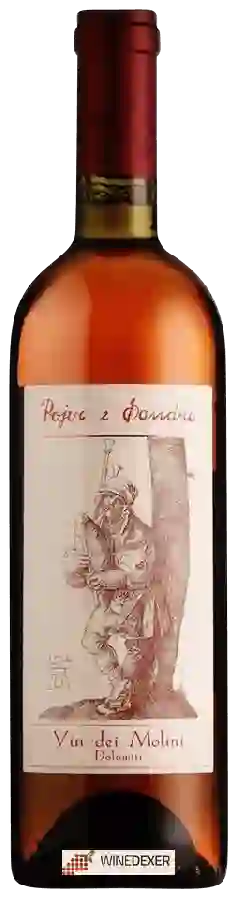
Winery Pojer e SandriVin dei Molini Dolomiti
 Pink wine



This wine generally goes well with

Wine flavors and olphactive analysis

On the nose the Vin dei Molini Dolomiti of Winery Pojer e Sandri in the region of Trentino-Alto-Adige often reveals types of flavors of earth, citrus fruit or red fruit.
Details and technical informations about Winery Pojer e Sandri's Vin dei Molini Dolomiti.
Discover the grape variety: Fiano blanc
Structured, aromatic dry whites with a pale golden colour, an ample palate and preserved acidity, showing signature aromas of white flowers (acacia, honeysuckle), yellow fruits (pear, peach), honey, hazelnut, almond and volcanic mineral notes. Fine ageing and cellaring potential. The absolute star of Fiano di Avellino DOCG in Campania, one of Italy's great whites. Indigenous Italian variety from Campania, one of the oldest in the south (Roman era).
Last vintages of this wine
The best vintages of Vin dei Molini Dolomiti from Winery Pojer e Sandri are 2012, 2016, 2015, 2014 and 0.
Informations about the Winery Pojer e Sandri
The Winery Pojer e Sandri is one of of the world's great estates. It offers 25 wines for sale in the of Vigneti delle Dolomiti to come and discover on site or to buy online.

The wine region of Vigneti delle Dolomiti
Alpine IGT covering Trentino, Alto Adige and northern Veneto in the UNESCO Dolomites, high-altitude vineyards in a taut climate. Lively, precise whites dominate. Signature Pinot Grigio with signature notes of citrus, pear, white flowers and a saline touch, thirst-quenching palate. Ample Chardonnay, aromatic Müller-Thurgau, lively Sauvignon.
The wine region of Trentino-Alto-Adige
Italy's northernmost alpine vineyard, two identities. Aromatic, precise whites are the stars: signature opulent Gewurztraminer (lychee, rose, spice), ample Pinot Grigio, mineral Pinot Bianco, lively high-altitude Muller-Thurgau. Native reds: dense fruity Teroldego (blackberry, violet), deep Lagrein with plum and chocolate notes, light crunchy Schiava, spicy Marzemino. Trento DOC Metodo Classico sparklers.
The word of the wine: Roussette
See highness.