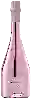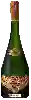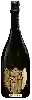
Winery Pierre MignonCuvée Présidentielle Madingou Coeur d'or Champagne
 Sparkling wine
This wine generally goes well with pork, rich fish (salmon, tuna etc) or shellfish.

Food and wine pairings with Cuvée Présidentielle Madingou Coeur d'or Champagne
Pairings that work perfectly with Cuvée Présidentielle Madingou Coeur d'or Champagne



Original food and wine pairings with Cuvée Présidentielle Madingou Coeur d'or Champagne

The Cuvée Présidentielle Madingou Coeur d'or Champagne of Winery Pierre Mignon matches generally quite well with dishes of pork, rich fish (salmon, tuna etc) or shellfish such as recipes of white cabbage with bacon, tuna flan with leek coulis or sautéed squid with parsley.
Details and technical informations about Winery Pierre Mignon's Cuvée Présidentielle Madingou Coeur d'or Champagne.
Discover the grape variety: Altesse
Structured, aromatic whites with an ample palate and firm acidity, featuring aromas of white flowers (acacia), white peach, ripe pear, honey, candied citrus, toasted almond and alpine mineral notes. Good length and ageing potential. Absolute star of Roussette de Savoie AOC (especially crus Frangy, Marestel, Monthoux) and Roussette du Bugey AOC. Autochthonous Savoyard variety; legend has it that it was brought from Cyprus by Crusaders in the 14th century.
Informations about the Winery Pierre Mignon
The Winery Pierre Mignon is one of of the world's great estates. It offers 56 wines for sale in the of Champagne to come and discover on site or to buy online.

The wine region of Champagne
World benchmark sparkling wines: fine bubbles, citrusy tension, notes of brioche, toasted almond, white flowers and white-fleshed fruits after ageing on lees. Three grapes blended or solo: fleshy Pinot Noir (38%), fruity Meunier (33%), chiselled Chardonnay (28%). From straight Blanc de Blancs to vinous Blanc de Noirs, from non-vintage Brut to age-worthy Millésimé. AOC since 1927, 34,300 ha on chalk, 17 Grands Crus and 44 Premiers Crus.
The word of the wine: Maceration
Prolonged contact and exchange between the juice and the grape solids, especially the skin. Not to be confused with the time of fermentation, which follows maceration. The juice becomes loaded with colouring matter and tannins, and acquires aromas. For a rosé, the maceration is short so that the colour does not "rise" too much. For white wines too, a "pellicular maceration" can be practised, which allows the wine to acquire more fat.