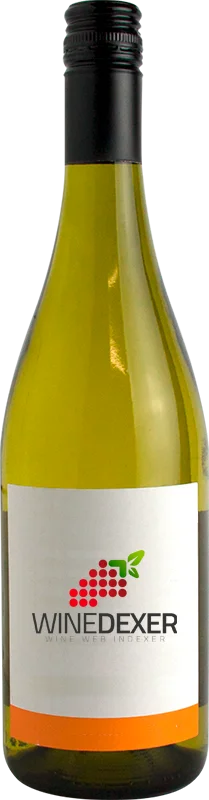
Winery Pierre Chavind'Émilie Réserve Spéciale Blanc
 White wine
In the mouth this white wine is a powerful.
This wine generally goes well with rich fish (salmon, tuna etc), shellfish or mild and soft cheese.
Taste structure of the d'Émilie Réserve Spéciale Blanc from the Winery Pierre Chavin
Light | Bold | |
Dry | Sweet | |
Soft | Acidic |
In the mouth the d'Émilie Réserve Spéciale Blanc of Winery Pierre Chavin in the region of Burgundy is a powerful.
Food and wine pairings with d'Émilie Réserve Spéciale Blanc
Pairings that work perfectly with d'Émilie Réserve Spéciale Blanc



Original food and wine pairings with d'Émilie Réserve Spéciale Blanc


The d'Émilie Réserve Spéciale Blanc of Winery Pierre Chavin matches generally quite well with dishes of pasta, rich fish (salmon, tuna etc) or shellfish such as recipes of phad thai (thai style fried noodles), sea bream a la plancha or cassolettes of scallops.
Details and technical informations about Winery Pierre Chavin's d'Émilie Réserve Spéciale Blanc.
Discover the grape variety: Dattier de Beyrouth
Of natural origin, it was initially multiplied in the region of Cavaillon in Vaucluse. It is also present in many countries where the climate allows the grapes to ripen well. It is registered in the Official Catalogue of table grape varieties, list A1. Finally, the Beirut Date Tree has long been used as a progenitor for new varieties of table grapes, with Danuta being a good example.
Informations about the Winery Pierre Chavin
The Winery Pierre Chavin is one of of the world's great estates. It offers 119 wines for sale in the of Burgundy to come and discover on site or to buy online.

The wine region of Burgundy
Bourgogne is the catch-all regional appellation title of the Burgundy wine region in eastern France ("Bourgogne" is the French name for Burgundy). Burgundy has a Complex and comprehensive appellation system; counting Premier Cru and Grand Cru titles, the region has over 700 appellation titles for its wines. Thus, Burgundy wines often come from one Vineyard (or several separate vineyards) without an appellation title specific to the region, Village or even vineyard. A standard Burgundy wine may be made from grapes grown in one or more of Burgundy's 300 communes.
The word of the wine: De-vatting
Separation of the fermented juice from all solid particles (skin, pips, deposit of lees) by transferring it to a second tank.