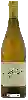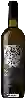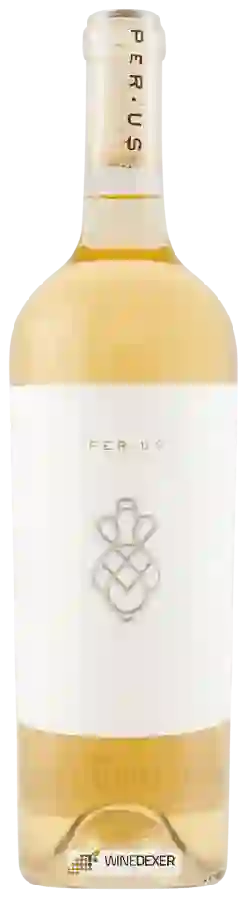
Winery PerUsVeena
 White wine


In the mouth this white wine is a powerful with a nice freshness.
This wine generally goes well with vegetarian, shellfish or goat cheese.

Taste structure of the Veena from the Winery PerUs
Light | Bold | |
Dry | Sweet | |
Soft | Acidic |
In the mouth the Veena of Winery PerUs in the region of California is a powerful with a nice freshness.
Food and wine pairings with Veena
Pairings that work perfectly with Veena


Original food and wine pairings with Veena
The Veena of Winery PerUs matches generally quite well with dishes of shellfish, vegetarian or goat cheese such as recipes of giant paella cooked on a wood fire, quiche with bacon and gruyère cheese or broccoli, goat cheese and roquefort quiche.
Details and technical informations about Winery PerUs's Veena.
Discover the grape variety: Morrastel
Intensely coloured and structured reds with a deep purple hue, firm tannins and an ample palate with preserved acidity, featuring signature aromas of black fruits (blackberry, blackcurrant), spices, liquorice and balsamic notes. Ageing profile. Grown in small quantities in Roussillon, producing distinctive southern cuvées. French synonym of the Spanish Graciano according to genetic analyses, autochthonous black grape from the Languedoc-Roussillon.
Last vintages of this wine
The best vintages of Veena from Winery PerUs are 0
Informations about the Winery PerUs
The Winery PerUs is one of of the world's greatest estates. It offers 9 wines for sale in the of Napa Valley to come and discover on site or to buy online.

The wine region of Napa Valley
Absolute reference for American Cabernet Sauvignon: powerful, opulent reds with ripe aromas of blackcurrant, blackberry, chocolate and cedar, velvety tannins and a silky finish, long ageing. Also round Merlot, rich buttery Chardonnay, fruity Sauvignon Blanc, spicy Zinfandel. Narrow Californian valley between the Mayacamas and Vaca Mountains, tempered by San Pablo Bay fog, 17 sub-AVAs (Oakville, Rutherford, Stags Leap, Howell Mountain). Cradle of icons Opus One, Screaming Eagle, Caymus.
The wine region of California
Powerful, sunny reds: dense Napa Cabernet Sauvignon (blackcurrant, chocolate, tobacco, ample tannins), spicy, jammy Zinfandel from the Sierra Foothills, silky red-fruited Pinot Noir on the cool coast (Sonoma, Russian River, Central Coast). Opulent, buttery Chardonnay, notes of yellow fruit and vanilla. Varied climate, from the hot interior to the Pacific-cooled coast. 80% of US production, 139 AVAs including Napa (1st AVA, 1981).
The word of the wine: R-C (champagne)
Harvesting-cooperator. It is the cooperative which elaborates the champagne of its members from their mixed contributions. It gives them bottles on which they stick their own label. It is legal without being intellectually honest. When you walk around the Champagne region, you may come across signs that say "Vigneron récoltant" to indicate a member of a cooperative. You can always ask him where his vats and press are.