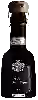
Winery PenfoldsWood Aged Tawny
 Natural sweet wine
This wine generally goes well with
Details and technical informations about Winery Penfolds's Wood Aged Tawny.
Discover the grape variety: Hegel
German, intraspecific cross obtained in 1955 between helfensteiner and heroldreber by August Karl Herold (1902-1973) at the Weinsberg Research Institute. With these same parents he also obtained the dornfelder. One can meet the Hegel in Switzerland, Belgium, Germany, ... completely unknown in France.
Informations about the Winery Penfolds
The Winery Penfolds is one of wineries to follow in Barossa.. It offers 198 wines for sale in the of Barossa to come and discover on site or to buy online.

The wine region of Barossa
Barossa is one of the six wine-producing zones of SouthAustralia, and arguably the most recognized name in the Australian wine industry. Barossa wines have attracted more international awards than any other region in the country. It is divided into two sections: the western Barossa Valley (effectively the Warmer valley floor) and on the eastern side the cooler, higher altitude Eden Valley, both of which have a distinct Geographical Indication (GI) formalized in 1997. Grapegrowing conditions vary immensely across the wider Barossa zone and this is reflected in the markedly different wine styles produced here.
The wine region of Australie du Sud
SouthAustralia is one of Australia's six states, located (as the name suggests) in the south of the vast island continent. It's the engine room of the Australian wine industry, responsible for about half of the country's total production each year. But there's more to the region than quantity - countless high-quality wines are produced here, most from the region's signature Grape, Shiraz. These include such fine, collectible wines as Penfolds Grange, Henschke Hill of Grace, Torbreck The Laird and d'Arenberg The Dead Arm.
The word of the wine: Extraction
All the methods (pumping over, punching down) that allow the colour and tannins to be extracted from the grape skin during maceration, before fermentation begins. It is also possible to macerate after fermentation, but gently, so as not to extract the tannins from the seeds, which are greener. Because of its solvent power, alcohol favours extraction.