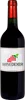
Winery OrahovicaCabernet Sauvignon
 Red wine



This wine generally goes well with poultry, beef or lamb.

Food and wine pairings with Cabernet Sauvignon
Pairings that work perfectly with Cabernet Sauvignon



Original food and wine pairings with Cabernet Sauvignon

The Cabernet Sauvignon of Winery Orahovica matches generally quite well with dishes of beef, lamb or spicy food such as recipes of romazava (madagascar), lamb curl or chili con carne.
Details and technical informations about Winery Orahovica's Cabernet Sauvignon.
Discover the grape variety: Cabernet-Sauvignon
Structured, tannic reds, deeply coloured, with aromas of blackcurrant, blackberry, cedar, tobacco and graphite, underpinned by firm acidity and fine ageing potential. Cornerstone of the great Médoc estates (Pauillac, Saint-Estèphe, Saint-Julien) and signature of Napa Valley, Coonawarra and Maipo. The world's most planted red variety, a natural cross of Cabernet Franc x Sauvignon Blanc born in Bordeaux.
Last vintages of this wine
The best vintages of Cabernet Sauvignon from Winery Orahovica are 0
Informations about the Winery Orahovica
The Winery Orahovica is one of of the world's greatest estates. It offers 12 wines for sale in the of Continental Region to come and discover on site or to buy online.

The wine region of Continental Region
Vast inland Croatia (Kontinentalna Hrvatska) from Karlovac to Vukovar via Zagreb, continental climate distinct from the Mediterranean coast. Signature Graševina (Welschriesling) as white king: lively and fruity with notes of green apple, pear, citrus, white flowers, sweet almond and a mineral touch, taut and thirst-quenching palate — the inland soul (two-thirds whites). Aromatic Traminac (lychee, rose), fine Pinot Blanc, full Chardonnay, taut Riesling. Airy Pinot Noir emerges.
The word of the wine: Performance
Quantity of grapes harvested per hectare. In AOC, the average yield is limited on the proposal of the appellation syndicate, validated by the Inao. The use of high-performance plant material (especially clones) and better control of vine diseases have increased yields. This is not without consequences on the quality of the wines (dilution) and on the state of the market (too much wine). We must not over-simplify: low yields are not synonymous with quality, and it is often in years with generous harvests that we find the greatest vintages (1982 and 1986 in Bordeaux, 1996 in Champagne, 1990 and 2005 in Burgundy...).