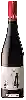
Winery OlvenaHache Garnacha - Syrah
 Red wine



In the mouth this red wine is a powerful.
This wine generally goes well with poultry, beef or veal.

Taste structure of the Hache Garnacha - Syrah from the Winery Olvena
Light | Bold | |
Smooth | Tannic | |
Dry | Sweet | |
Soft | Acidic |
In the mouth the Hache Garnacha - Syrah of Winery Olvena in the region of Catalogne is a powerful.
Food and wine pairings with Hache Garnacha - Syrah
Pairings that work perfectly with Hache Garnacha - Syrah



Original food and wine pairings with Hache Garnacha - Syrah

The Hache Garnacha - Syrah of Winery Olvena matches generally quite well with dishes of beef, pasta or veal such as recipes of burger roll, fish with tamarind or ardéchoise fly.
Details and technical informations about Winery Olvena's Hache Garnacha - Syrah.
Discover the grape variety: Perricone
Structured, intensely colored reds with a deep dark ruby robe, firm tannins and a dense palate, with signature aromas of black fruits (blackberry, blackcurrant), black cherry, spices, Mediterranean garrigue and balsamic notes. Sunny Sicilian profile with fine ageing potential. Traditional component of Sicilian blends and star of Eloro DOC, embodying the viticultural heritage of western Sicily. Indigenous black variety from Palermo.
Last vintages of this wine
The best vintages of Hache Garnacha - Syrah from Winery Olvena are 2005, 2008, 2007, 0 and 2006.
Informations about the Winery Olvena
The Winery Olvena is one of of the world's greatest estates. It offers 17 wines for sale in the of Catalogne to come and discover on site or to buy online.

The wine region of Catalogne
Cradle of Cava (~95% of Spanish output, traditional method): Macabeo, Xarel-lo, Parellada trilogy, fine fruity bubble. Quality peak in Priorat DOCa: dense, mineral reds on llicorella (schist), old-vine Garnacha and Cariñena with black fruit, garrigue notes, firm tannins. Also Penedès, fleshy Montsant, sunny Empordà, Costers del Segre. Mediterranean.
The word of the wine: Malolactic fermentation
Called second fermentation or malo for short. It is the degradation (under the effect of bacteria) of the malic acid naturally present in the wine into milder, less aggressive lactic acid. Some producers or wineries refuse this operation by "blocking the malo" (by cold and adding SO2) to keep a maximum of acidity which carries the aromas and accentuates the sensation of freshness.