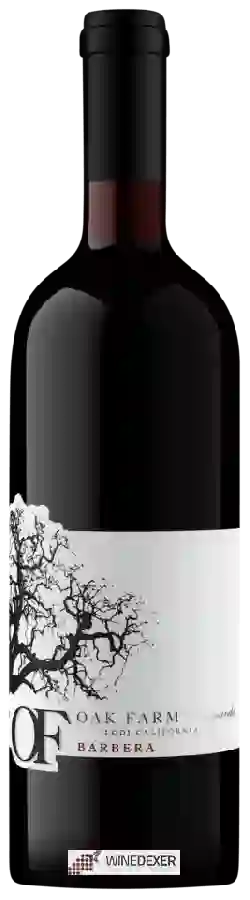
Winery Oak FarmBarbera
 Red wine


This wine generally goes well with pork, poultry or mild and soft cheese.
The Barbera of the Winery Oak Farm is in the top 10 of wines of Lodi.
Wine flavors and olphactive analysis






On the nose the Barbera of Winery Oak Farm in the region of California often reveals types of flavors of non oak, earth or vegetal and sometimes also flavors of oak, spices or red fruit.
Food and wine pairings with Barbera
Pairings that work perfectly with Barbera



Original food and wine pairings with Barbera

The Barbera of Winery Oak Farm matches generally quite well with dishes of pork, spicy food or poultry such as recipes of veal saltimbocca, fish and shrimp curry or oven roasted chicken.
Details and technical informations about Winery Oak Farm's Barbera.
Discover the grape variety: Perlette
Crossing made in the United States in 1936 by Professor Harold P. Olmo of the University of Davis (California) between the queen of the vines and the sultana, registered in the Official Catalogue of vine varieties list A1. - Synonymy: no known synonym (for all the synonyms of the grape varieties, click here!).
Last vintages of this wine

The best vintages of Barbera from Winery Oak Farm are 2014, 2016, 2015, 0 and 2018.
Informations about the Winery Oak Farm
The Winery Oak Farm is one of of the world's greatest estates. It offers 41 wines for sale in the of Lodi to come and discover on site or to buy online.

The wine region of Lodi
The wine region of Lodi is located in the region of Central Valley of Central Valley of United States. We currently count 739 estates and châteaux in the of Lodi, producing 1731 different wines in conventional, organic and biodynamic agriculture. The wines of Lodi go well with generally quite well with dishes .
The wine region of California
California is the largest and most important wine region in the United States. It represents the southern two-thirds (850 miles or 1,370 kilometers) of the country's west coast. (Oregon and Washington make up the rest. ) The state also spans nearly 10 degrees of latitude.
The word of the wine: Phenolic ripeness
A distinction is made between the ripeness of sugars and acids and the ripeness of tannins and other compounds such as anthocyanins and tannins, which will bring structure and colour. Grapes can be measured at 13° potential without having reached this phenolic maturity. Vinified at this stage, they will give hard, astringent wines, without charm.