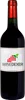
Niederösterreichisches LandesweingutErgo Retz
 wine
wine
This wine generally goes well with
The Ergo Retz of the Niederösterreichisches Landesweingut is in the top 0 of wines of Pergola.
Details and technical informations about Niederösterreichisches Landesweingut's Ergo Retz.
Discover the grape variety: Bouysselet
Resulting from a natural intraspecific crossing between the Savagnin and the Cauzette plant, the latter being close to the Tannat. It should be noted that it has very often been confused with the Saint Côme, it is true that we have noted some points of resemblance. Bouysselet is very old in the Haute Garonne, more precisely in Villaudric, where it almost disappeared, but has now been replanted to the great satisfaction of connoisseurs. It is registered in the Official Catalogue of wine grape varieties, list A1.
Informations about the Niederösterreichisches Landesweingut
The Niederösterreichisches Landesweingut is one of of the world's great estates. It offers 5 wines for sale in the of Pergola to come and discover on site or to buy online.

The wine region of Pergola
The wine region of Pergola is located in the region of Marches of Italy. Wineries and vineyards like the Domaine Terracruda or the Domaine Vetrere produce mainly wines red, white and pink. The most planted grape varieties in the region of Pergola are Aléatico, they are then used in wines in blends or as a single variety. On the nose of Pergola often reveals types of flavors of spices, red fruit or floral and sometimes also flavors of black fruit, earth or microbio.
The wine region of Marche
Marche (or Le Marche; pronounced Mar-kay) is a region in eastern CentralItaly. It is most associated with white wines made from Trebbiano and Verdicchio grapes. Marche occupies a roughly triangular area. Its longer sides are formed by the Apennine Mountains to the west and the Adriatic Sea to the east.
The word of the wine: Tanin
A natural compound contained in the skin of the grape, the seed or the woody part of the bunch, the stalk. The maceration of red wines allows the extraction of tannins, which give the texture, the solidity and also the mellowness when the tannins are "ripe". The winemaker seeks above all to extract the tannins from the skin, the ripest and most noble. The tannins of the seed or stalk, which are "greener", especially in average years, give the wine hardness and astringency. The wines of Bordeaux (based on Cabernet and Merlot) are full of tannins, those of Burgundy much less so, with Pinot Noir containing little.