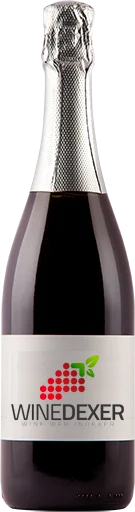
Winery Nettare dei Santi28.9 Rosé
 Sparkling wine


This wine generally goes well with pork, poultry or mild and soft cheese.
Food and wine pairings with 28.9 Rosé
Pairings that work perfectly with 28.9 Rosé



Original food and wine pairings with 28.9 Rosé

The 28.9 Rosé of Winery Nettare dei Santi matches generally quite well with dishes of pork, spicy food or poultry such as recipes of rougail sausage, shrimp marinade or moist parmesan steak.
Details and technical informations about Winery Nettare dei Santi's 28.9 Rosé.
Discover the grape variety: Mondeuse
Mondeuse noir is a grape variety that originated in France (Savoie). It produces a variety of grape specially used for wine making. It is rare to find this grape to eat on our tables. This variety of grape is characterized by medium to large bunches, and medium sized grapes. Mondeuse noir can be found in many vineyards: South-West, Cognac, Bordeaux, Savoie & Bugey, Languedoc & Roussillon, Loire Valley, Provence & Corsica, Rhône Valley, Beaujolais.
Last vintages of this wine
The best vintages of 28.9 Rosé from Winery Nettare dei Santi are 0
Informations about the Winery Nettare dei Santi
The Winery Nettare dei Santi is one of of the world's great estates. It offers 35 wines for sale in the of Lombardia to come and discover on site or to buy online.

The wine region of Lombardia
Lombardy is one of Italy's largest and most populous regions, located in the north-central Part of the country. It's home to a handful of popular and well-known wine styles, including the Bright, cherry-scented Valtellina and the high-quality Sparkling wines Franciacorta and Oltrepo Pavese Metodo Classico. Lombardy is Italy's industrial powerhouse, with the country's second largest city (Milan) as its regional capital. Despite this, the region has vast tracts of unspoiled countryside, home to many small wineries that produce a significant portion of the region's annual wine production of 1.
The word of the wine: Drawing (liqueur de)
In champagne and sparkling wines of traditional method, addition to the wine, at the time of bottling (tirage) of sugars and yeasts dissolved in wine. These components will provoke the second fermentation in the bottle leading to the formation of carbon dioxide bubbles.