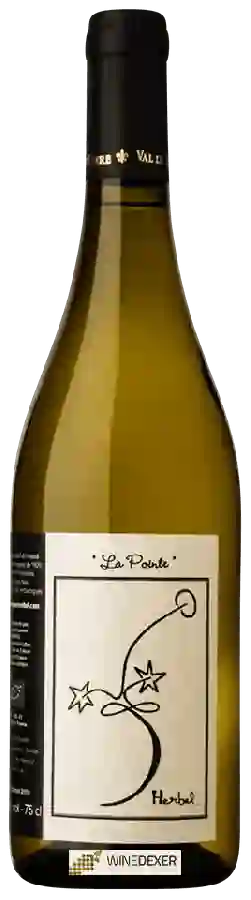
Winery HerbelVieilles Vignes La pointe
 White wine


This wine generally goes well with fruity desserts, lean fish or shellfish.

Wine flavors and olphactive analysis


On the nose the Vieilles Vignes La pointe of Winery Herbel in the region of Vin de France often reveals types of flavors of non oak, earth or oak and sometimes also flavors of tree fruit.
Food and wine pairings with Vieilles Vignes La pointe
Pairings that work perfectly with Vieilles Vignes La pointe


Original food and wine pairings with Vieilles Vignes La pointe
The Vieilles Vignes La pointe of Winery Herbel matches generally quite well with dishes of shellfish, lean fish or fruity desserts such as recipes of shrimp in coconut milk curry, baked cod à la provençale or express cherry clafoutis.
Details and technical informations about Winery Herbel's Vieilles Vignes La pointe.
Discover the grape variety: Chenin blanc
Chameleon whites with taut acidity, ranging from mineral dry (Savennières, Vouvray sec) to off-dry and medium-sweet (Vouvray, Montlouis), sumptuous botrytised sweet (Quarts-de-Chaume, Bonnezeaux, Coteaux du Layon) and brilliant sparkling (Crémant de Loire, Vouvray brut). Aromas of quince, apple, honey, white flowers, beeswax and flint. An Anjou variety, also star of South Africa's Western Cape.
Last vintages of this wine
The best vintages of Vieilles Vignes La pointe from Winery Herbel are 2014
Informations about the Winery Herbel
The Winery Herbel is one of of the world's greatest estates. It offers 10 wines for sale in the of Vin de France to come and discover on site or to buy online.

The wine region of Vin de France
The freest category of French wine, the playground of winemakers working outside the AOC. All styles combined: fruity reds, lively or ambitious whites, everyday rosés, unusual blends, natural wines, atypical grapes (Petit Manseng in Languedoc, Riesling in Provence), experimental winemaking (skin-contact whites, no sulphur). Grape and vintage labelling allowed, no geographic constraint. From the pop, convivial cuvée to the artisan gem: freedom in a bottle.
The word of the wine: Disgorging (champagne)
This is the evacuation of the deposit formed by the yeasts during the second fermentation in the bottle, by opening the bottle. The missing volume is completed with the liqueur de dosage - a mixture of wine and cane sugar - before the final cork is placed. For some years now, some producers have been replacing this sugar with rectified concentrated musts (concentrated grape juice) which give excellent results. A too recent dosage (less than three months) harms the gustatory harmony of the champagne.





