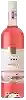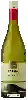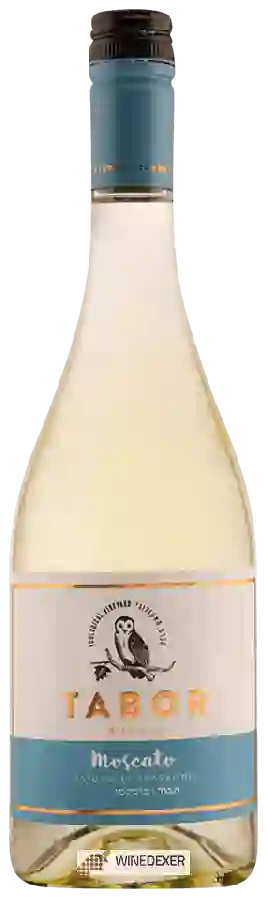
Winery TaborMoscato (מוסקטו)
 Sparkling wine



This wine generally goes well with sweet desserts
Food and wine pairings with Moscato (מוסקטו)
Pairings that work perfectly with Moscato (מוסקטו)

Original food and wine pairings with Moscato (מוסקטו)
The Moscato (מוסקטו) of Winery Tabor matches generally quite well with dishes of sweet desserts such as recipes of king's cake with frangipane.
Details and technical informations about Winery Tabor's Moscato (מוסקטו).
Discover the grape variety: Tinto cão
- Origin : Most certainly from the north of Portugal, it is a very old grape variety, present for a very long time in the Douro Valley where it is very often associated with other grape varieties to produce the famous Port. It can also be found in the United States (California, etc.), Australia, Spain, Mexico, etc.
Last vintages of this wine
The best vintages of Moscato (מוסקטו) from Winery Tabor are 2019, 2017, 0, 2018
Informations about the Winery Tabor
The Winery Tabor is one of of the world's great estates. It offers 54 wines for sale in the of Galilee to come and discover on site or to buy online.

The wine region of Galilee
Galilee is an administrative and wine region in Northern Israel. Its name is perhaps most widely recognized in the context of Lake Galilee, via its associations with the Bible, but it is now steadily becoming known as a wine region. 'Water into wine' is not a New theme for the Galilee region as the story of the wedding at Cana, in which Jesus turns water into wine, is widely thought to have its origins here. The Galilee (Galil in Hebrew) is located in the northern most reach of the couunty, with Golan Heights to the east and the Coastal Plains to the west.
The word of the wine: Hat
Solid part (marc), composed of pips and skins (sometimes of the stalk), which forms at the top of the tank during fermentation. The pigeage consists in breaking this cap to put back in suspension these elements and to favour the exchanges between the juice and the skins.