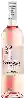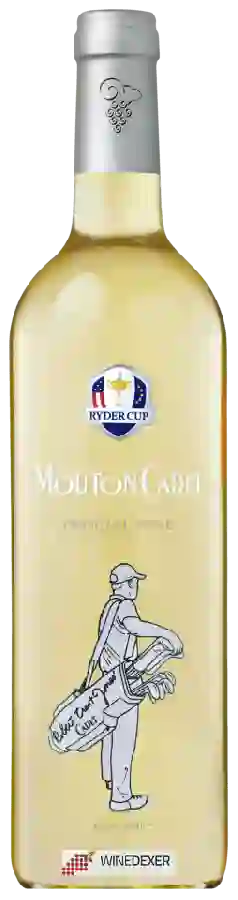
Winery Mouton CadetEdition Limitée Ryder Cup Blanc
 White wine


In the mouth this white wine is a powerful.
This wine generally goes well with pork, vegetarian or poultry.

Taste structure of the Edition Limitée Ryder Cup Blanc from the Winery Mouton Cadet
Light | Bold | |
Dry | Sweet | |
Soft | Acidic |
In the mouth the Edition Limitée Ryder Cup Blanc of Winery Mouton Cadet in the region of Bordeaux is a powerful.
Food and wine pairings with Edition Limitée Ryder Cup Blanc
Pairings that work perfectly with Edition Limitée Ryder Cup Blanc



Original food and wine pairings with Edition Limitée Ryder Cup Blanc


The Edition Limitée Ryder Cup Blanc of Winery Mouton Cadet matches generally quite well with dishes of pork, vegetarian or poultry such as recipes of roast pork with prunes, ham and comté quiche or coconut chicken curry in thermomix.
Details and technical informations about Winery Mouton Cadet's Edition Limitée Ryder Cup Blanc.
Discover the grape variety: Christmas rose
Table grape with long clusters of pink-red berries with thin skin and crunchy flesh, with a pleasant sweet taste. Late variety (harvest in autumn/early winter, hence the name). Very rarely vinified. Grown mainly in California and Chile for export markets, prized for its attractive pink-red appearance, good shelf life and late availability. American black table grape obtained by crossing for fresh consumption.
Informations about the Winery Mouton Cadet
The Winery Mouton Cadet is one of of the world's great estates. It offers 42 wines for sale in the of Bordeaux to come and discover on site or to buy online.

The wine region of Bordeaux
World-renowned age-worthy reds, led by round Merlot (plum, black fruit) or firm Cabernet Sauvignon (blackcurrant, cedar, graphite), blended with Cabernet Franc and Petit Verdot for tannic structure. Structured Médoc and Graves, velvety Saint-Émilion and Pomerol. Also crisp dry whites (Sauvignon/Sémillon) and opulent sweet Sauternes with honey and candied fruit. A 110,000 ha Gironde vineyard, 65 appellations, cradle of the 1855 classified growths.
The word of the wine: Tries (harvest by)
Harvesting in several successive passages to harvest at their optimal concentration the grapes affected by noble rot. They allow the production of great sweet wines.