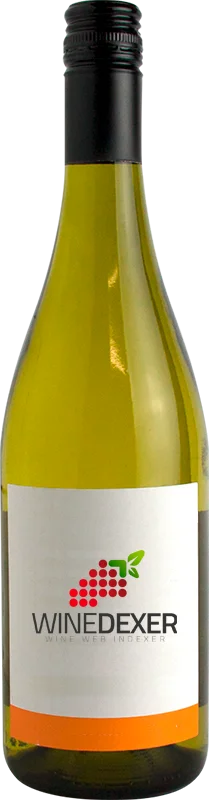
Winery MoritzburgGrauburgunder Trocken
 White wine


In the mouth this white wine is a .
This wine generally goes well with pork, cured meat or mushrooms.
Taste structure of the Grauburgunder Trocken from the Winery Moritzburg
Light | Bold | |
Dry | Sweet | |
Soft | Acidic |
In the mouth the Grauburgunder Trocken of Winery Moritzburg in the region of Pfalz is a .
Food and wine pairings with Grauburgunder Trocken
Pairings that work perfectly with Grauburgunder Trocken


Original food and wine pairings with Grauburgunder Trocken

The Grauburgunder Trocken of Winery Moritzburg matches generally quite well with dishes of pork, spicy food or mushrooms such as recipes of creole chipolatas, rib steak, tomato sauce, peppers. or tagliatelle with scallops.
Details and technical informations about Winery Moritzburg's Grauburgunder Trocken.
Discover the grape variety: Phoenix
Interspecific cross between the white bacchus and the white Villard obtained in 1964 by Gerhardt Erich Alleweldt (1927/2005) at the Geilweilerhof Station in Siebeldingen, Germany. It should be noted that the sirius and the staufer were also born from these same parents. Phoenix is little known even in France, although it is registered in the Official Catalogue of varieties of table grapes on the A2 list.
Last vintages of this wine

The best vintages of Grauburgunder Trocken from Winery Moritzburg are 2016, 0
Informations about the Winery Moritzburg
The Winery Moritzburg is one of of the world's greatest estates. It offers 10 wines for sale in the of Pfalz to come and discover on site or to buy online.

The wine region of Pfalz
Pfalz is a key wine producing region in western Germany, located between the Rhein/Rhine river and the low-lying Haardt mountain range (a natural continuation of the Alsatian Vosges). It covers a rectangle of land 45 miles (75km) Long and 15 miles (25km) wide. To the NorthLiesRheinhessen; to the South, the French border and Alsace. In terms of both quality and quantity, Pfalz is one of Germany's most important regions, and one which shows great promise for the future.
The word of the wine: Peduncle
The stem of a flower or fruit.