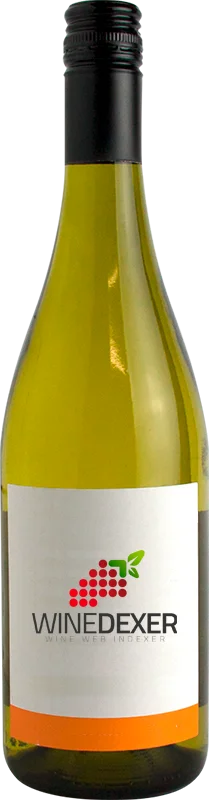
Winery MIOTorrontes
 White wine



In the mouth this white wine is a powerful with a nice freshness.
This wine generally goes well with vegetarian, spicy food or aperitif.
Taste structure of the Torrontes from the Winery MIO
Light | Bold | |
Dry | Sweet | |
Soft | Acidic |
In the mouth the Torrontes of Winery MIO in the region of Mendoza is a powerful with a nice freshness.
Food and wine pairings with Torrontes
Pairings that work perfectly with Torrontes



Original food and wine pairings with Torrontes
The Torrontes of Winery MIO matches generally quite well with dishes of spicy food, vegetarian or aperitif such as recipes of lamb kebab, zucchini and goat cheese quiche or baked vegetable chips.
Details and technical informations about Winery MIO's Torrontes.
Discover the grape variety: Muscat Valvin
Interspecific crossing between the muscat du moulin or 299-35 Couderc (Pédro Ximénès x 603 Couderc (carignan noir x vitis rupestris) and the muscat ottonel obtained in 1962 by Bruce Reisch and Thomas Henick-Kling at the Experimental Station of the Cornell University - Geneva - New York (United States) Apart from this country, it is almost unknown in other wine-producing countries.
Last vintages of this wine
The best vintages of Torrontes from Winery MIO are 2012, 2014, 2013
Informations about the Winery MIO
The Winery MIO is one of of the world's greatest estates. It offers 13 wines for sale in the of Mendoza to come and discover on site or to buy online.

The wine region of Mendoza
Mendoza is by far the largest wine region in Argentina. Located on a high-altitude plateau at the edge of the Andes Mountains, the province is responsible for roughly 70 percent of the country's annual wine production. The French Grape variety Malbec has its New World home in the vineyards of Mendoza, producing red wines of great concentration and intensity. The province Lies on the western edge of Argentina, across the Andes Mountains from Chile.
The word of the wine: Maceration
Prolonged contact and exchange between the juice and the grape solids, especially the skin. Not to be confused with the time of fermentation, which follows maceration. The juice becomes loaded with colouring matter and tannins, and acquires aromas. For a rosé, the maceration is short so that the colour does not "rise" too much. For white wines too, a "pellicular maceration" can be practised, which allows the wine to acquire more fat.