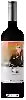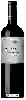
Winery Mi TerruñoBonarda
 Red wine



In the mouth this red wine is a powerful with a nice freshness.
This wine generally goes well with pork, poultry or veal.
Taste structure of the Bonarda from the Winery Mi Terruño
Light | Bold | |
Smooth | Tannic | |
Dry | Sweet | |
Soft | Acidic |
In the mouth the Bonarda of Winery Mi Terruño in the region of Mendoza is a powerful with a nice freshness.
Wine flavors and olphactive analysis




On the nose the Bonarda of Winery Mi Terruño in the region of Mendoza often reveals types of flavors of non oak, earth or oak and sometimes also flavors of spices, red fruit or black fruit.
Food and wine pairings with Bonarda
Pairings that work perfectly with Bonarda



Original food and wine pairings with Bonarda

The Bonarda of Winery Mi Terruño matches generally quite well with dishes of veal, pork or game (deer, venison) such as recipes of veal breast with new vegetables, chicken bonne femme or deer jig.
Details and technical informations about Winery Mi Terruño's Bonarda.
Discover the grape variety: Gaglioppo
A very old grape variety cultivated in southern Italy (Sicily, Calabria, etc.), the Greeks and Romans already knew it. It is related to sangiovese and mantonico bianco. According to Pierre Galet, Magliocco is identical to Galioppo.
Last vintages of this wine
The best vintages of Bonarda from Winery Mi Terruño are 2017, 2016, 2014, 2012 and 2015.
Informations about the Winery Mi Terruño
The Winery Mi Terruño is one of of the world's great estates. It offers 29 wines for sale in the of Maipu to come and discover on site or to buy online.

The wine region of Maipu
Maipu is a wine-growing sub-zone of Argentina's largest viticultural region, Mendoza. A historic wine region, Maipu is home to some of Mendoza's top-quality and high end producers of Bright, intense, red wine from Malbec, Cabernet Sauvignon and Pinot Noir. The small town of Maipu Lies on the Southern outskirts of Mendoza City, and Vineyard land stretches south from here toward the Mendoza River, encompassing the smaller regions of Barrancas, Lunlunta and Coquimbito. The similarly extensive Lujan de Cuyo region is located just to the west of Maipu, and San Martin is 32 kilometers (20 mi) to the east.
The wine region of Mendoza
Mendoza is by far the largest wine region in Argentina. Located on a high-altitude plateau at the edge of the Andes Mountains, the province is responsible for roughly 70 percent of the country's annual wine production. The French Grape variety Malbec has its New World home in the vineyards of Mendoza, producing red wines of great concentration and intensity. The province Lies on the western edge of Argentina, across the Andes Mountains from Chile.
The word of the wine: Muscat blanc à petits grains
A white grape variety cultivated since antiquity on the shores of the Mediterranean, it is considered the noblest of the muscats. It is mainly used to make sweet wines, often from mutage. In France, it is the sole variety used in many natural sweet wines: muscat-de-frontignan, muscat-de-mireval, muscat-de-lunel, muscat-de-saint-jean-de-minervois, muscat-de-beaumes-de-venise, muscat-du-cap-corse. Combined with Muscat d'Alexandrie, it gives Muscat-de-Rivesaltes. It is also used to make sparkling white wines (clairette-de-die; moscato d'asti and asti spumante in Italy) and dry wines (alsace-muscat). Powerfully aromatic and complex, its wines evoke fresh grapes, roses, exotic fruits, citrus fruits and spices.