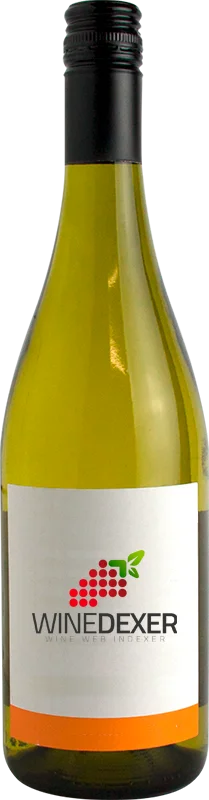
Winery MestaChardonnay - Moscatel
 White wine


This wine generally goes well with pork, vegetarian or poultry.
The Chardonnay - Moscatel of the Winery Mesta is in the top 20 of wines of Uclés.

Food and wine pairings with Chardonnay - Moscatel
Pairings that work perfectly with Chardonnay - Moscatel



Original food and wine pairings with Chardonnay - Moscatel

The Chardonnay - Moscatel of Winery Mesta matches generally quite well with dishes of pork, rich fish (salmon, tuna etc) or vegetarian such as recipes of coconut beans, salmon steak on a bed of leeks or leek, goat cheese and bacon quiche.
Details and technical informations about Winery Mesta's Chardonnay - Moscatel.
Discover the grape variety: Chardonnay
Whites with many faces: mineral and taut at Chablis (lemon, green apple, flint), opulent and buttery at Meursault and Puligny-Montrachet (hazelnut, brioche, yellow fruits), tense and chalky in Champagne (Blanc de Blancs). Also vinified sparkling and widely exported (Sonoma, Margaret River, Casablanca). A Burgundian variety, a cross of Pinot Noir × Gouais Blanc, half-sibling of Aligoté.
Last vintages of this wine

The best vintages of Chardonnay - Moscatel from Winery Mesta are 2011, 0, 2012
Informations about the Winery Mesta
The Winery Mesta is one of of the world's greatest estates. It offers 8 wines for sale in the of Uclés to come and discover on site or to buy online.

The wine region of Uclés
DO in Castile-La Mancha (2006), 100 km southeast of Madrid (Cuenca and Toledo), high-altitude vineyards 500–1,200 m on limestone soils, cool nights contrasting with lower La Mancha. Tempranillo ("Cencibel") flagship red: fruity and structured with cherry, plum, leather, tobacco and spice, firm tannins and altitude-preserved acidity. Firm Cabernet Sauvignon, supple Merlot and dense Bobal complement. Lively Verdejo and Macabeo in whites.
The wine region of Castille
Cradle of great Castilian reds, high-altitude plateaus (450-1000 m) along the Duero. Tempranillo king (aka Tinta de Toro, Tinto Fino): powerful, concentrated, structured reds with notes of black cherry, plum, leather, tobacco and spice, firm tannins from altitude and cool nights. Stars: Ribera del Duero (Vega Sicilia, Pingus), fleshy Toro, Bierzo (floral, mineral Mencía). Lively, herbaceous Verdejo whites from Rueda.
The word of the wine: Deposit
Solid particles that can naturally coat the bottom of a bottle of wine. It is rather a guarantee that the wine has not been mistreated: in fact, to avoid the natural deposit, rather violent processes of filtration or cold passage (- 7 or - 8 °C) are used in order to precipitate the tartar (the small white crystals that some people confuse with crystallized sugar: just taste to dissuade you from it)


