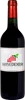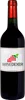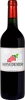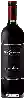
Winery MerkSpätburgunder Trocken
 Red wine



In the mouth this red wine is a with a nice freshness.
This wine generally goes well with poultry, beef or veal.
Taste structure of the Spätburgunder Trocken from the Winery Merk
Light | Bold | |
Smooth | Tannic | |
Dry | Sweet | |
Soft | Acidic |
In the mouth the Spätburgunder Trocken of Winery Merk in the region of Pfalz is a with a nice freshness.
Food and wine pairings with Spätburgunder Trocken
Pairings that work perfectly with Spätburgunder Trocken



Original food and wine pairings with Spätburgunder Trocken

The Spätburgunder Trocken of Winery Merk matches generally quite well with dishes of beef, veal or game (deer, venison) such as recipes of delicious bourguignon, roast veal grand-mère madou or roast duck breast stuffed with porcini mushrooms and chanterelles.
Details and technical informations about Winery Merk's Spätburgunder Trocken.
Discover the grape variety: Foglia tonda
A very old Italian grape variety, known in the south of Tuscany, in Umbria, ... in France, it is almost unknown. Foglia tonda is related to sangiovese or nielluccio from Corsica.
Last vintages of this wine
The best vintages of Spätburgunder Trocken from Winery Merk are 2012, 0
Informations about the Winery Merk
The Winery Merk is one of of the world's greatest estates. It offers 28 wines for sale in the of Pfalz to come and discover on site or to buy online.

The wine region of Pfalz
Pfalz is a key wine producing region in western Germany, located between the Rhein/Rhine river and the low-lying Haardt mountain range (a natural continuation of the Alsatian Vosges). It covers a rectangle of land 45 miles (75km) Long and 15 miles (25km) wide. To the NorthLiesRheinhessen; to the South, the French border and Alsace. In terms of both quality and quantity, Pfalz is one of Germany's most important regions, and one which shows great promise for the future.
The word of the wine: Yeast
Micro-organisms at the base of all fermentative processes. A wide variety of yeasts live and thrive naturally in the vineyard, provided that treatments do not destroy them. Unfortunately, their replacement by laboratory-selected yeasts is often the order of the day and contributes to the standardization of the wine. Yeasts are indeed involved in the development of certain aromas.