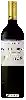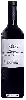
Château de MedeSaint Emilion
 Red wine



In the mouth this red wine is a powerful with a nice balance between acidity and tannins.
This wine generally goes well with poultry, beef or game (deer, venison).
Taste structure of the Saint Emilion from the Château de Mede
Light | Bold | |
Smooth | Tannic | |
Dry | Sweet | |
Soft | Acidic |
In the mouth the Saint Emilion of Château de Mede in the region of Bordeaux is a powerful with a nice balance between acidity and tannins.
Food and wine pairings with Saint Emilion
Pairings that work perfectly with Saint Emilion



Original food and wine pairings with Saint Emilion

The Saint Emilion of Château de Mede matches generally quite well with dishes of beef, lamb or game (deer, venison) such as recipes of american style beef marinade, lamb stew with melting peppers or canned duck confit.
Details and technical informations about Château de Mede's Saint Emilion.
Discover the grape variety: Nero d'Avola
Most certainly of Italian origin, more precisely from Sicily where it is very well known. It should be noted that a certain number of Italian grape varieties bear the synonym or name "calabrese", whether or not followed by an epithet, and care should be taken not to confuse them. Calabrese is also known in the United States, Italy, Bulgaria and Malta. In France, it is virtually absent from the vineyard, although it is listed in the Official Catalogue of Wine Grape Varieties, list A1.
Informations about the Château de Mede
The Château de Mede is one of of the world's greatest estates. It offers 2 wines for sale in the of Libournais to come and discover on site or to buy online.

The wine region of Libournais
Rich in world-renowned wines, such as Saint-Emilion Grands Crus and Bordeaux/libournais/pomerol">Pomerol, the Libourne region Lies on the right bank of the Dordogne, on the edge of the Périgord. The region takes its name from the port city of Libourne, where many merchants from the Correze settled in the early 19th century. But its jewel is the small medieval city of Saint-Emilion, listed as a Unesco World Heritage Site and one of the most famous showcases of the Bordeaux wine region. The region is very homogeneous due to its hilly landscapes, its geology (predominantly limestone subsoil), the concentration of vineyards and the importance of family-run, small or medium-sized estates, which contrast with the large Medoc-type estates.
The wine region of Bordeaux
Bordeaux, in southwestern France, is one of the most famous, prestigious and prolific wine regions in the world. The majority of Bordeaux wines (nearly 90% of the production Volume) are the Dry, medium and Full-bodied red Bordeaux blends for which it is famous. The finest (and most expensive) are the wines of the great châteaux of Haut-Médoc and the right bank appellations of Saint-Émilion and Pomerol. The former focuses (at the highest level) on Cabernet Sauvignon, the latter on Merlot.
The word of the wine: Grape
Fruit of the vine in the form of bunches of grapes, also called berries, attached to the stalk. The grapes used to make wine are known as grape varieties, a generic word that designates many types of vine plant with their own characteristics.